
Endometriosis: symptoms, diagnosis and treatment options explained
Quick answer
Endometriosis is a condition where tissue similar to the womb lining grows elsewhere in the body, causing pain, particularly around periods. It's common, affecting around 1 in 10 women of reproductive age in the UK. Diagnosis can take time, but treatment, from pain relief to hormonal therapy, can ease symptoms significantly.
What endometriosis is and why it happens
Endometriosis is a long-term condition in which tissue similar to the lining of the womb (the endometrium) grows in other places, most often the ovaries, fallopian tubes and the tissue lining the pelvis. Like the womb lining itself, this tissue responds to the hormonal changes of the menstrual cycle: it thickens, breaks down and bleeds each month. Unlike a normal period, however, this blood has no way to leave the body, which can lead to inflammation, scarring and, in some cases, adhesions that bind pelvic organs together.
It's a common condition, affecting an estimated 1 in 10 women and people assigned female at birth of reproductive age in the UK, yet the exact cause isn't fully understood. Several theories are thought to play a role, including retrograde menstruation (where period blood flows backwards into the pelvis), immune system differences that affect how this tissue is cleared, and a genetic tendency that can run in families. It isn't caused by anything you did or didn't do, and it isn't linked to hygiene, diet or lifestyle choices.
Recognising the symptoms
The symptoms of endometriosis vary widely from person to person, and the severity of symptoms doesn't always match the extent of the tissue found. The most common symptom is pelvic pain, often (though not always) worse around the time of a period. This can include severe period cramps that aren't fully relieved by usual pain relief, pain during or after sex, and pain when opening your bowels or passing urine, particularly during a period.
- Heavy periods, sometimes with clots or bleeding that soaks through protection quickly.
- Pain in the lower back or pelvis that isn't limited to period days.
- Persistent fatigue that isn't explained by anything else.
- Difficulty getting pregnant, which for some people is the first sign that prompts investigation.
Some people have few or no obvious symptoms and are only diagnosed while being investigated for something else, such as fertility difficulties. If any of this sounds familiar, particularly pain that disrupts your daily life, it's worth having it assessed rather than assuming it's simply part of having periods.
Why diagnosis can take time
Many people with endometriosis describe a long road to being taken seriously. Part of this comes down to overlap with other conditions: the pain and bowel symptoms can resemble IBS, and bladder pain can resemble recurrent cystitis, so other causes are often explored first. There's also no simple blood test that confirms endometriosis, which means diagnosis relies on piecing together a symptom pattern alongside examination and imaging.
Cultural normalisation of period pain plays a part too. Because cramping is common and often dismissed as "just periods", pain that's actually well beyond typical can go unrecognised for a long time, by patients and clinicians alike. NHS guidance is now clear that debilitating period-related pain should never simply be accepted; it's always worth raising with a clinician, and being persistent if your first conversation doesn't lead anywhere useful.
How endometriosis is diagnosed
Diagnosis usually starts with a detailed conversation about your symptoms: when pain occurs, how severe it is, its relationship to your cycle, and how it affects your daily life. A pelvic examination may follow to check for tenderness, lumps or restricted movement of pelvic organs, which can point towards the condition.
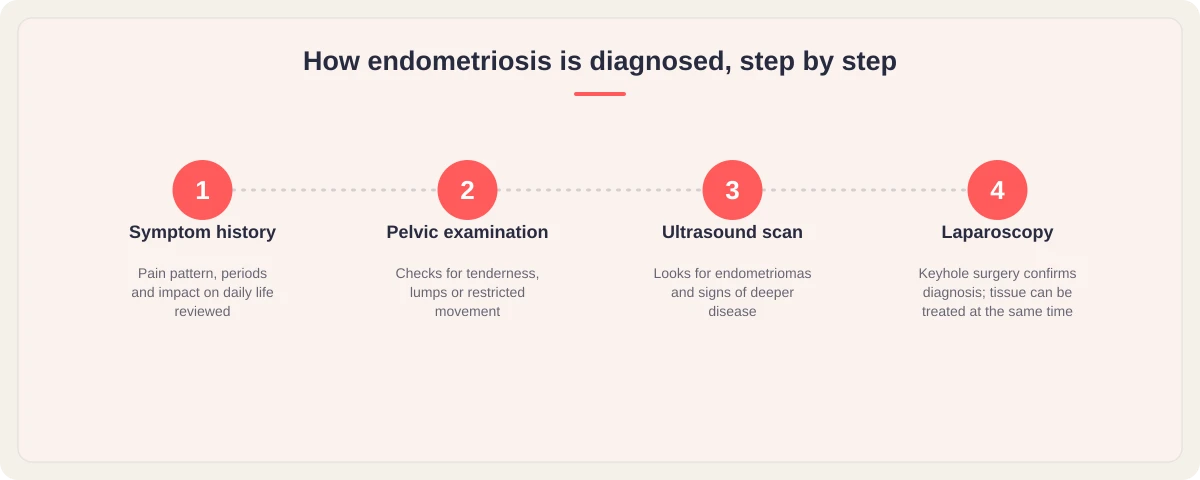
An ultrasound scan, usually transvaginal, is often arranged next. This can identify larger areas of endometriosis, such as ovarian endometriomas (sometimes called "chocolate cysts"), though a normal scan doesn't rule the condition out, as smaller or more diffuse areas of tissue may not show up. An MRI scan is sometimes used for a fuller picture, particularly if deep disease is suspected. The only way to confirm endometriosis with certainty is a laparoscopy, a keyhole surgical procedure carried out under general anaesthetic, during which a surgeon can often treat visible tissue at the same time as confirming the diagnosis.
Not everyone needs a laparoscopy straight away. Many people are managed on the basis of symptoms, examination and scan findings first, with surgery reserved for when it will change the treatment plan, or when other approaches haven't helped.
Treatment options explained
There's no single treatment that suits everyone; the right approach depends on your symptoms, how much they affect your life, and whether you're hoping to conceive now or in future. Treatment aims to reduce pain and manage the impact of the condition, and is usually built up in stages.
Pain relief is often the starting point. Anti-inflammatory painkillers such as Naproxen 250mg & 500mg Tablets or Mefenamic Acid 500mg can ease cramping pain, sometimes combined with paracetamol. Hormonal treatments are commonly used alongside or instead of pain relief: the combined pill, progestogen-only options and hormonal coils all work by suppressing the menstrual cycle, which can reduce the growth and activity of endometriosis tissue and ease pain considerably for many people.
Where pain relief and hormonal treatment haven't given enough control, or where fertility is a factor, surgery may be considered. Laparoscopic removal or ablation of endometriosis tissue can improve pain and, for some people, improve the chances of conceiving. For more complex or severe cases, referral to a specialist endometriosis centre is available on the NHS and brings together gynaecology, pain management and, where relevant, fertility expertise in one place.
Managing symptoms day to day
Alongside medical treatment, everyday self-care measures make a real difference for many people. Heat, a hot water bottle or heat pad on the lower tummy or back, can ease cramping pain. Gentle movement such as walking, swimming or yoga is tolerated well by many people and may help with pain and fatigue, even on days when a workout feels like the last thing you want. Pacing activities across the week, rather than pushing through and crashing afterwards, can help manage the fatigue that often comes with the condition.
Keeping a simple symptom diary, noting pain levels, timing and what helps, gives you and your clinician something concrete to work from and helps track whether a treatment is actually working. Endometriosis can also take a toll on mental wellbeing, particularly when symptoms are dismissed or diagnosis takes a long time, so don't hesitate to ask for support with this alongside the physical symptoms.
When to seek help
Speak to a clinician if you have pelvic pain that's severe, that isn't controlled by over-the-counter pain relief, or that's affecting your work, relationships or daily life. The same applies if you have pain during or after sex, pain opening your bowels or passing urine around your period, or if you've been trying to conceive without success. You don't need to have every symptom on this list, and you don't need to wait until things feel unbearable before asking for help.
If you've already been told your symptoms are "normal" but they don't feel that way to you, it's reasonable to ask for a second opinion or a referral. Endometriosis is a genuine, treatable condition, and getting the right support earlier tends to make it easier to manage.
Frequently asked questions
What are the first signs of endometriosis?
Common early signs include period pain that isn't fully relieved by usual pain relief, pain during or after sex, and pain with bowel movements or urination around your period. Heavy periods and persistent fatigue are also common.
How is endometriosis diagnosed?
Diagnosis usually starts with a discussion of your symptoms and a pelvic examination, followed by an ultrasound scan. A laparoscopy (keyhole surgery) is the only way to confirm it with certainty, though many people are managed on symptoms and scan findings before that stage.
Can endometriosis be treated?
Yes. Treatment can't be guaranteed to remove the tissue entirely, but pain relief, hormonal treatment and, where needed, surgery can significantly reduce symptoms and improve day-to-day life for most people.
Does the contraceptive pill help with endometriosis?
For many people, yes. The combined pill and other hormonal methods suppress the menstrual cycle, which can reduce the activity of endometriosis tissue and ease pain. Suitability depends on your health history, so a clinician will advise.
Is endometriosis the same as bad period pain?
Not necessarily. Many people have painful periods without endometriosis. What sets endometriosis apart is often the pattern: pain that's severe, that occurs outside of your period, that comes with pain during sex or bowel symptoms, or that gradually worsens over time.
Can endometriosis affect fertility?
It can make conceiving more difficult for some people, though many people with endometriosis conceive without treatment. If you've been trying to conceive without success, this is worth discussing with a clinician alongside your other symptoms.