
Iron deficiency anaemia: symptoms, testing and treatment explained
Quick answer
Iron deficiency anaemia often causes tiredness, pale skin, breathlessness and heart palpitations. It is confirmed with a blood test (usually a full blood count plus ferritin), and treatment is normally iron supplements guided by a clinician, alongside dietary changes and finding the underlying cause.
What is iron deficiency anaemia?
Iron deficiency anaemia happens when the body does not have enough iron to make sufficient healthy red blood cells. Red blood cells carry oxygen around the body using a protein called haemoglobin, and iron is an essential building block of that protein. Without enough iron, haemoglobin levels fall, red blood cells become smaller and paler than normal, and less oxygen reaches the body's tissues.
It is the most common type of anaemia in the UK and can affect anyone, though some groups are more likely to be affected than others. It usually develops gradually, which is one reason the early signs are easy to put down to simply being busy or tired, rather than something worth a blood test.
Iron deficiency and iron deficiency anaemia are not quite the same thing. Iron deficiency describes low iron stores in the body; anaemia is what happens once those stores fall so low that haemoglobin production is affected. Someone can have depleted iron stores for some time before blood tests show anaemia itself, which is one reason a general full blood count alone does not always tell the full story.
What causes iron deficiency anaemia?
Iron deficiency develops when the body loses more iron than it takes in, or when it cannot absorb iron properly from food. Common causes include heavy or prolonged menstrual periods, pregnancy (when iron needs increase substantially to support the growing baby and placenta), and blood loss from the digestive system, for example from ulcers, piles or, less commonly, bowel conditions that need further investigation.
A diet that does not provide enough iron-rich food can also contribute, particularly for people following a vegetarian or vegan diet without planning for iron intake, and for anyone with a generally low or restricted diet. Conditions that affect how the gut absorbs nutrients, such as coeliac disease or inflammatory bowel disease, can reduce iron absorption even when intake looks adequate on paper. Some medicines, including long-term use of certain anti-inflammatory painkillers, can also increase the risk by irritating the stomach lining and causing slow, low-level blood loss that is easy to miss.
Because there are so many possible causes, working out why someone has become iron deficient is just as important as treating the deficiency itself. Replacing iron without understanding the underlying reason risks missing something that needs its own attention, and increases the chance the deficiency simply returns once supplements stop.
Common symptoms to look out for
Symptoms often build slowly, so many people adjust to feeling below their best without realising why. The most frequently reported signs include persistent tiredness and low energy, pale skin, lips or the inner surface of the eyelids, breathlessness during activity that would not normally leave you short of breath, and a noticeably fast or pounding heartbeat.
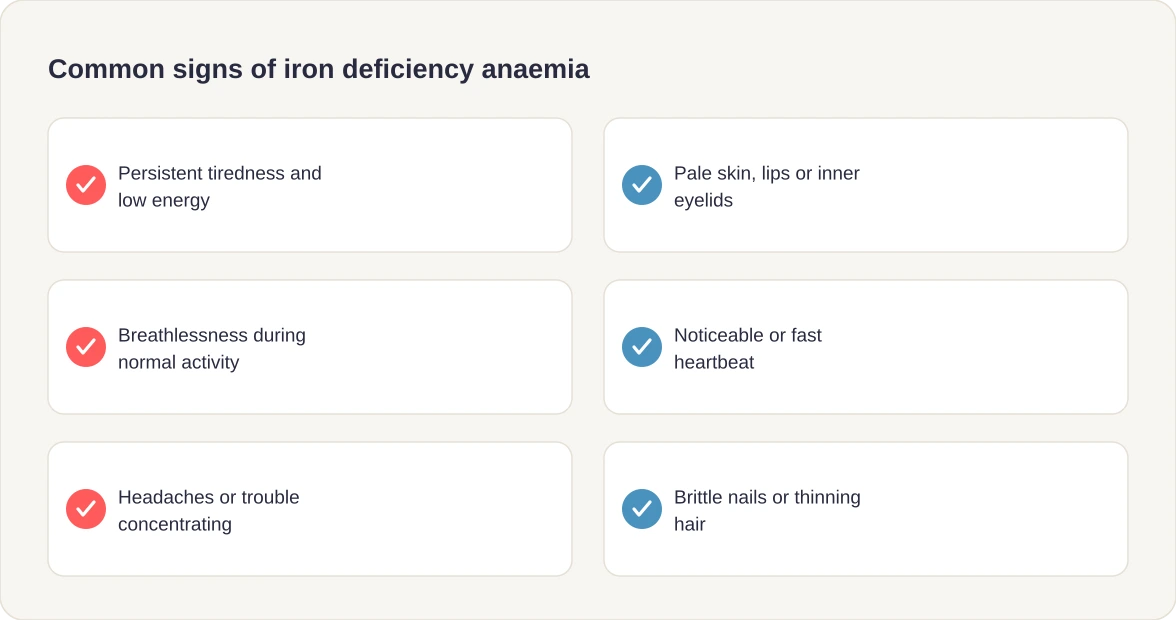
Headaches, difficulty concentrating and dizziness are also common, along with less familiar signs such as brittle nails, hair thinning, a sore or unusually smooth tongue, and, occasionally, an urge to eat non-food items like ice, known as pica. Not everyone gets every symptom, and how noticeable they are often depends on how quickly the deficiency has developed and how low levels have fallen.
Who is more likely to be affected?
Women of reproductive age are at higher risk because of monthly blood loss through periods, and the risk rises further with heavier periods, during pregnancy, and after childbirth. People who follow a vegetarian or vegan diet, older adults with a smaller appetite or a less varied diet, frequent blood donors, and endurance athletes are also more commonly affected, the last group partly because intense training can increase iron losses through sweat and the gut.
Anyone with a diagnosed digestive condition that affects absorption, or with ongoing, unexplained blood loss from any source, should take new or worsening symptoms seriously and seek a proper assessment rather than assuming tiredness is simply down to a busy lifestyle. Children and teenagers going through rapid growth spurts can also become iron deficient if their diet does not keep pace with increased demand.
How is it diagnosed?
A blood test is the only reliable way to confirm iron deficiency anaemia; symptoms alone are not enough to diagnose it, since tiredness and breathlessness overlap with many other conditions. A full blood count (FBC) checks haemoglobin and the size of red blood cells, while a ferritin test measures the body's stored iron and is usually the most useful single marker for confirming a true iron deficiency rather than another cause of anaemia.
Ferritin results need some interpretation, because ferritin also rises during infection or inflammation, which can mask a true deficiency if it is measured in isolation. A clinician reviewing your results will usually look at the full picture, sometimes alongside other markers, rather than a single number, and will factor in your symptoms, diet and medical history before reaching a conclusion.
If the cause is not obvious, for example in a man or a postmenopausal woman with no clear reason for blood loss, further investigation is usually recommended to rule out a source of bleeding that needs its own treatment. This is a normal and sensible part of working out the underlying cause, not a cause for alarm on its own.
How is iron deficiency anaemia treated?
Treatment usually starts with iron supplements, most often as tablets taken once or twice a day for around three months, sometimes longer, to rebuild the body's iron stores rather than just correct the blood count. Some people experience stomach upset, constipation or dark stools while taking iron tablets, which can often be reduced by taking them with food or trying a different dose, an alternate-day schedule, or a different formulation under clinical guidance.
For people who cannot tolerate oral iron, whose deficiency is severe, or who need levels corrected quickly, for example ahead of surgery or later in pregnancy, an iron infusion given directly into a vein is sometimes considered. This is arranged and delivered in a clinical setting rather than at home, and is not typically a first-line option.
A repeat blood test after a few months checks that levels have improved as expected. Iron supplements should always be started on the basis of a blood test, not guesswork, because taking iron when it is not needed can mask other problems and, over time, lead to iron building up to unsafe levels. Treating the underlying cause, whether that is heavy periods, a dietary gap or a digestive issue, matters just as much as replacing the iron itself, otherwise the deficiency is likely to return.
Diet and ongoing monitoring
Iron from animal sources, known as haem iron and found in red meat, poultry and fish, is absorbed more easily than the non-haem iron found in plant sources like lentils, beans, chickpeas, tofu, dark leafy greens and fortified breakfast cereals. Pairing plant-based iron with vitamin C, for example a glass of orange juice, some peppers or a handful of berries alongside a meal, can improve how much is absorbed, while tea, coffee and calcium-rich foods taken at the same time as an iron-rich meal can reduce absorption.
People following a vegetarian or vegan diet can meet their iron needs through food, but it usually takes a bit more planning: combining iron-rich plant foods with a vitamin C source at most meals, and being aware that non-haem iron is absorbed less efficiently than the iron in meat and fish.
Once levels are back to normal, most people do not need to keep taking supplements indefinitely, though anyone with an ongoing cause, such as heavy periods, pregnancy or a long-term digestive condition, may need periodic blood tests to catch any recurrence early rather than waiting for symptoms to return.
When to speak to a pharmacist or GP
It is worth arranging a blood test if you have ongoing tiredness that does not improve with rest, noticeable paleness, breathlessness with everyday activity, or any unexplained bleeding. This is particularly important if you are pregnant, have very heavy periods, follow a restricted diet, or have a digestive condition that affects absorption.
Seek prompt medical advice, rather than waiting for a routine appointment, if you notice black or tarry stools, blood in your stool or vomit, chest pain, or breathlessness that comes on suddenly or feels severe, as these can point to a cause that needs urgent attention.
Our pharmacy team can arrange private blood testing, including ferritin and a full blood count, with results reviewed by a clinician who can explain what they mean and discuss suitable next steps, subject to suitability. If you would rather go through your GP, that route works just as well; either way, the important thing is getting a proper test before starting any iron supplement.
Frequently asked questions
What are the first signs of iron deficiency anaemia?
The earliest signs are often subtle: ongoing tiredness, low energy and slightly reduced exercise tolerance. As it progresses, pale skin, breathlessness and a noticeably fast heartbeat tend to become more obvious.
Can iron deficiency anaemia be caused by diet alone?
Yes, a diet that does not provide enough iron can cause it, particularly if intake is already borderline. However, blood loss (for example from periods or the digestive system) and poor absorption are also common causes and are worth ruling out even if your diet is not perfect.
How long does it take for iron supplements to work?
Energy levels often start to improve within a few weeks, but it typically takes around three months of treatment to fully rebuild the body's iron stores. A repeat blood test confirms whether levels have returned to normal.
Can you have low iron without being anaemic?
Yes. Iron stores can fall before haemoglobin drops low enough to be classed as anaemia, which is why a ferritin test is useful even when a standard blood count still looks normal.
Is it safe to take iron supplements without a blood test first?
It is not recommended. Taking iron without confirming a deficiency can mask other underlying problems and, over time, lead to iron levels building up higher than is safe. A blood test should always come first.
Does tea or coffee affect iron absorption?
Yes, tannins in tea and coffee can reduce how much iron is absorbed from a meal or supplement. It generally helps to leave a gap of an hour or so either side of drinking them.