
PMDD (premenstrual dysphoric disorder): symptoms and treatment options
Quick answer
PMDD (premenstrual dysphoric disorder) causes significant mood and physical symptoms in the days before a period, easing once bleeding starts. It goes beyond ordinary PMS in severity and impact. Diagnosis usually involves tracking symptoms across two cycles. Treatment options include lifestyle changes, certain antidepressants, combined contraceptive pills and talking therapies, tailored to you.
What is PMDD?
Premenstrual dysphoric disorder (PMDD) is a condition where emotional and physical symptoms appear in the days before a period and ease once bleeding starts. It sits at the more severe end of premenstrual symptoms, and unlike ordinary premenstrual syndrome (PMS), the mood symptoms in PMDD are intense enough to disrupt work, relationships or daily life during the days they occur.
PMDD is a recognised diagnosis, not simply a difficult case of PMS. The pattern is cyclical: symptoms tend to begin after ovulation, in what is called the luteal phase, and improve within a few days of the period starting. Understanding this timing is often the first clue that points towards PMDD rather than another cause of low mood or anxiety.
Because the symptoms of PMDD can look similar to other mood or anxiety conditions when viewed in isolation, the cyclical timing is what sets it apart. A woman living with PMDD may feel entirely well for two or three weeks of the month, only for mood, energy and concentration to change noticeably as her period approaches. This predictable, repeating pattern, month after month, is a defining feature that a clinician will look for when considering the diagnosis.
How PMDD differs from ordinary PMS
Most women notice some premenstrual changes, such as mild bloating, breast tenderness or slight irritability in the days before a period. PMDD goes further than this.
- Timing: both PMS and PMDD follow the menstrual cycle, appearing before a period and easing once it starts.
- Severity: PMDD symptoms, particularly mood symptoms, are more intense and harder to manage day to day than typical PMS.
- Impact: PMDD noticeably affects work, study, relationships or usual activities, rather than being an inconvenience that passes with minimal disruption.
- Mood focus: PMDD is defined mainly by mood and emotional symptoms, such as low mood, anxiety, irritability or a sense of being overwhelmed, alongside any physical symptoms.
Because premenstrual symptoms are so common, PMDD is sometimes dismissed or mistaken for straightforward PMS. Recognising when symptoms cross into PMDD territory, through their intensity and effect on daily life rather than their type, is an important step towards getting the right support.

Common symptoms of PMDD
Symptoms of PMDD usually appear in the one to two weeks before a period and improve within a few days of bleeding starting. They can include both emotional and physical symptoms.
Emotional and psychological symptoms often include marked mood swings, low mood or feelings of hopelessness, noticeable anxiety or tension, irritability or anger that affects relationships, difficulty concentrating, and a sense of being overwhelmed or out of control. Some women also describe reduced interest in usual activities, or changes to sleep, either sleeping more than usual or struggling to sleep at all.
Physical symptoms can overlap with those of ordinary PMS, and may include breast tenderness, bloating, joint or muscle aches, headaches and changes in appetite. On their own, these physical symptoms would not point to PMDD; it is the combination with significant mood change and disruption to daily life that sets it apart.
Not everyone experiences every symptom, and the mix and intensity can vary from one cycle to the next. What tends to stay consistent is the timing, symptoms building in the days before a period and lifting within a few days of it starting, and the fact that they are severe enough to get in the way of ordinary routines, whether that is concentrating at work, maintaining relationships, or simply feeling like yourself.
How PMDD is diagnosed
There is no single blood test for PMDD. Instead, diagnosis relies on tracking symptoms over time to confirm the cyclical pattern and rule out other explanations.
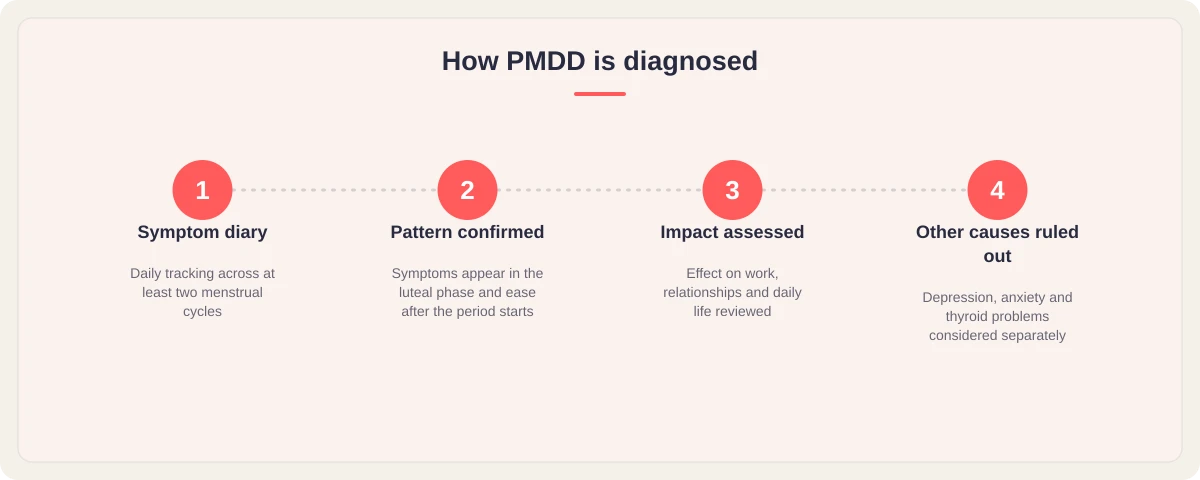
A symptom diary, kept daily across at least two menstrual cycles, is the standard way to confirm PMDD. This helps show whether symptoms consistently appear in the luteal phase, the time between ovulation and your period, and ease once bleeding starts. A clinician will also want to understand how much your symptoms affect your day-to-day life, work and relationships, since impact is a key part of the diagnosis.
Because PMDD symptoms can overlap with other conditions, such as depression, anxiety or thyroid problems, a clinician will usually consider these possibilities too. Depression and anxiety, for example, tend to be more constant across the month, whereas PMDD follows the clear cyclical pattern linked to the menstrual cycle. Getting this distinction right matters, because the most helpful treatment can differ depending on the underlying cause.
What causes PMDD?
The exact cause of PMDD is not fully understood, but it is thought to relate to an increased sensitivity to the normal hormonal changes of the menstrual cycle, rather than to abnormal hormone levels themselves. Many women with PMDD have hormone levels within the typical range, but appear to respond to the natural rise and fall of oestrogen and progesterone more strongly than others, particularly through their effect on mood-regulating chemicals in the brain such as serotonin.
Certain factors may make PMDD more likely, or make symptoms harder to manage, including a personal or family history of mood disorders such as depression or anxiety, high stress levels, and significant life changes. PMDD can also occur alongside other health conditions, which is one reason a clinical assessment looks at the wider picture rather than premenstrual symptoms in isolation.
It can help to know that PMDD is not a sign of weakness or something within your control to simply push through. It is a recognised way that some people's brains and bodies respond to normal cyclical hormone changes, and understanding this can make it easier to seek support rather than feeling you should manage it alone.
Treatment options for PMDD
Treatment for PMDD is usually built up in stages, starting with lifestyle measures and moving to medical options if symptoms continue to have a significant impact.
Lifestyle approaches that some women find helpful include regular exercise, prioritising sleep, reducing caffeine and alcohol, and using stress-management techniques. Keeping your symptom diary alongside these changes can help you and a clinician see whether they are making a difference.
Where lifestyle measures are not enough, a clinician may discuss medical options. Certain antidepressants, usually a type called an SSRI, can ease the mood symptoms of PMDD and, unlike their use in depression, can sometimes be taken only during the luteal phase rather than every day of the month. Some combined contraceptive pills can also help by evening out the hormonal fluctuations that trigger symptoms, though not every combined pill suits every person, and a clinician can talk through which options, if any, are appropriate for you. Talking therapies, such as cognitive behavioural therapy (CBT), are another option some women find useful alongside other treatment, particularly for managing the emotional impact of symptoms.
Because PMDD varies so much between individuals, treatment is usually personalised, and it can take some trial and adjustment to find what works best for you.
When and how to get support
It is worth speaking to a clinician if premenstrual symptoms are affecting your work, relationships or daily life, rather than assuming this is simply something to put up with. Keeping a symptom diary for a cycle or two before your appointment can be genuinely useful, as it gives a clear picture of the pattern and its impact to discuss.
A clinician can talk through your symptoms, help work out whether PMDD or another condition fits your pattern, and discuss suitable options for you. Because everyone's experience of PMDD is different, an individual conversation, rather than a one-size-fits-all approach, is the best way to find what may help.
If your mood symptoms ever feel unmanageable, or you have thoughts of harming yourself, treat this as urgent and seek help straight away from your GP, NHS 111, or emergency services if you are in immediate danger. PMDD can feel isolating, particularly when symptoms are dismissed as ordinary PMS, but with the right support most people find an approach that meaningfully eases their symptoms.
Frequently asked questions
What is the difference between PMDD and PMS?
PMDD causes more intense mood symptoms that noticeably affect daily life, work or relationships, while ordinary PMS tends to be milder. Both follow the same cyclical pattern, appearing before a period and easing once it starts.
What are the main symptoms of PMDD?
PMDD mainly involves mood symptoms such as low mood, anxiety, irritability and feeling overwhelmed, often alongside physical symptoms like bloating, breast tenderness and headaches, appearing in the one to two weeks before a period.
How is PMDD diagnosed?
There is no single test for PMDD. Diagnosis usually involves keeping a daily symptom diary across at least two menstrual cycles to confirm the cyclical pattern, alongside ruling out other conditions such as depression or anxiety.
What treatments are available for PMDD?
Options range from lifestyle changes such as exercise and reducing caffeine, to certain antidepressants (SSRIs), some combined contraceptive pills, and talking therapies such as CBT. A clinician can help decide which approach suits you.
When should I speak to a clinician about PMDD?
It is worth seeking advice if premenstrual symptoms are affecting your work, relationships or daily life. Keeping a symptom diary beforehand can help a clinician understand your pattern and discuss suitable next steps.