
Thrush in men: symptoms and treatment
Quick answer
Thrush in men, also called balanitis, is a yeast infection causing itching, redness and soreness of the penis, sometimes with a white discharge under the foreskin. It is not a sexually transmitted infection and usually clears with antifungal cream or a single capsule. Symptoms that keep returning are worth a clinical review.
What thrush in men is
Thrush in men, sometimes called balanitis when it affects the head of the penis, is caused by an overgrowth of a yeast, usually Candida, that lives harmlessly on the skin for most people. It becomes a problem only when the natural balance on the skin shifts and the yeast multiplies. It is common, particularly in men who are not circumcised, since the warm, moist environment under the foreskin can make it easier for yeast to build up, and it is not a sexually transmitted infection.
Balanitis itself is simply inflammation of the glans (the head of the penis), and yeast is one of several possible causes alongside irritation from soaps or friction, allergic reactions to products such as latex or perfumed washes, and other infections. Because the symptoms can overlap, an accurate picture matters before treating, especially if symptoms are severe, unusual or do not settle with standard treatment. Most cases are straightforward once correctly identified, and treatment usually brings noticeable relief within a matter of days.
Symptoms of thrush in men
The most common symptoms are itching and soreness of the penis, particularly around the head and under the foreskin, along with redness and swelling. Some men notice a thick white discharge under the foreskin, often described as similar to cottage cheese, and a mild unpleasant odour. The skin can also feel tight, sting when passing urine, or become uncomfortable during sex.
In more pronounced cases, small cracks or shiny, moist patches can develop on the glans and foreskin, and retracting the foreskin may feel tighter or more difficult than usual while the area is inflamed. Symptoms range from mild irritation to quite uncomfortable, but most cases respond well to treatment once correctly identified.
What causes it
Thrush tends to appear when something disturbs the natural balance of yeast and moisture on the skin. Not drying properly under the foreskin after washing is one of the most common triggers, since yeast thrives in warm, moist conditions. Tight-fitting or non-breathable underwear, prolonged time in damp sportswear or swimwear, and using perfumed soaps, shower gels or shaving products on the area can all contribute in the same way, by irritating the skin or trapping moisture against it.
A recent course of antibiotics can reduce the protective bacteria that normally help keep yeast in check, and poorly controlled diabetes is a well-recognised trigger, since higher glucose levels in sweat and urine encourage yeast growth. A tight foreskin (phimosis) that is hard to retract and clean underneath, a weakened immune system, being overweight (which can create more warm, skin-on-skin contact), and sex with a partner who has thrush can also play a part. Often there is no single obvious cause, and identifying which triggers apply to you is a useful part of reducing how often it happens.
How it is diagnosed and treated
Thrush in men is usually diagnosed from the symptoms and a look at the affected skin. A swab is not always needed, but a clinician may take one if the diagnosis is unclear, if treatment has not worked, or to rule out other causes of balanitis such as a bacterial infection or a skin condition.
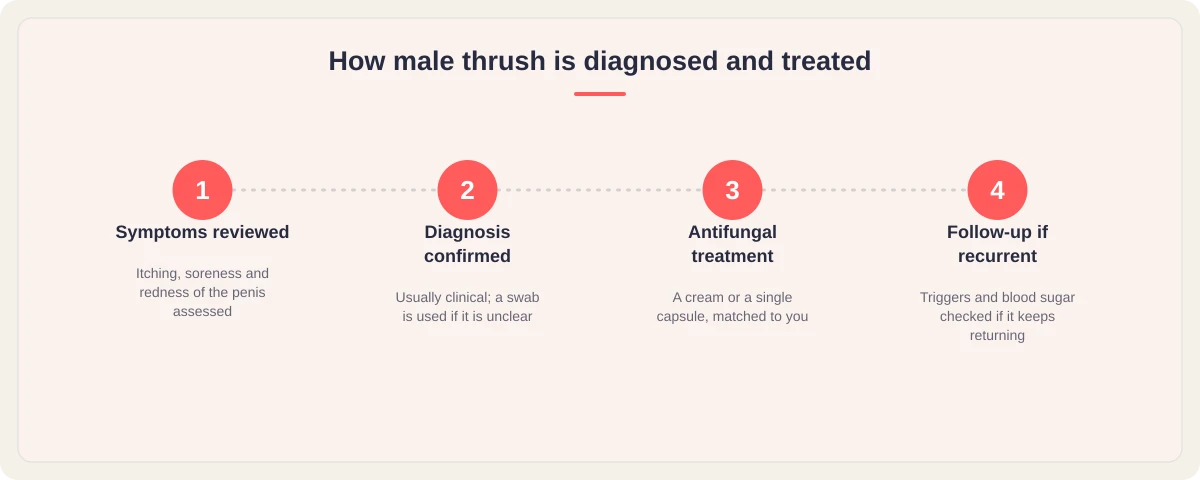
Most cases respond well to an antifungal cream applied to the affected area for a set number of days. For more widespread or stubborn symptoms, a single-dose oral antifungal capsule such as the Fluconazole 150mg Thrush Capsule is a convenient alternative that many men find effective. A clinician can advise which option suits your symptoms and circumstances, and whether the cream, the capsule, or both together make sense for you. Symptoms usually start to settle within a few days of starting treatment.
Self-care and reducing recurrence
Alongside treatment, a few simple habits can help the area settle and lower the chance of thrush coming back. These focus on keeping the area clean and dry without over-washing or irritating the skin further.
- Wash gently with water or an unperfumed emollient rather than soap or shower gel.
- Dry the area thoroughly after washing, including under the foreskin if you have one.
- Choose breathable cotton underwear and change out of damp sportswear or swimwear promptly.
- Avoid perfumed products, talc and harsh cleansers on the genital area.
- If you have diabetes, keeping blood sugar well controlled can reduce how often thrush occurs.
These steps support treatment but do not replace it. If self-care and a standard antifungal course are not clearing your symptoms, that is a clear signal to seek a review rather than repeating the same treatment.
Thrush, partners and sex
Because thrush is not a sexually transmitted infection, a partner without symptoms does not usually need treatment. However, the yeast can occasionally be passed between partners during sex, and a partner may develop their own symptoms of thrush as a result. If that happens, they can be assessed and treated in their own right.
Symptoms such as soreness and irritation can make sex uncomfortable, so it may help to wait until treatment has taken effect. It is also worth knowing that some antifungal creams can weaken latex condoms, which may make them less reliable during treatment, so check the product information or ask a pharmacist about timing and contraception if this applies to you.
When to seek help
Speak to a clinician if this is your first episode and you are not sure it is thrush, if symptoms have not improved within a week or two of treatment, or if thrush keeps coming back. You should also seek advice if you notice ulcers, blisters or unusual sores, bleeding, a discharge that looks or smells different from usual, a tight foreskin that will not retract, swelling that makes it hard to urinate, or if you have diabetes that is not well controlled, since recurrent thrush can sometimes be an early sign of undiagnosed or poorly managed diabetes.
These situations benefit from proper assessment because balanitis can have several different causes, including bacterial infections and skin conditions such as eczema or psoriasis, that need different treatment from thrush. A clinician can confirm what is going on, recommend the most suitable antifungal, and check for or discuss any underlying triggers, including arranging a blood sugar test if that seems relevant, if thrush keeps returning. Everything is handled discreetly and without judgement, so there is no need to delay seeking help.
Frequently asked questions
Is thrush in men a sexually transmitted infection?
No. Thrush is caused by an overgrowth of yeast that naturally lives on the skin and is not classed as a sexually transmitted infection. It can, however, occasionally be passed between partners during sex.
What is the fastest treatment for thrush in men?
An antifungal cream applied for a set number of days treats the area directly, while a single-dose oral capsule is a convenient alternative for some men. A pharmacist or clinician can help you choose based on your symptoms.
Can thrush in men be a sign of diabetes?
Recurrent or hard-to-clear thrush can sometimes be an early sign of undiagnosed or poorly controlled diabetes, since higher blood sugar encourages yeast growth. It is worth mentioning to a clinician if thrush keeps returning.
Why do I keep getting thrush?
Recurrent thrush can be linked to not drying properly after washing, tight or non-breathable underwear, antibiotics, a tight foreskin, or poorly controlled blood sugar. A clinician can help confirm the diagnosis and identify your triggers.
Can I catch thrush from my partner?
Thrush is not classed as a sexually transmitted infection, but the yeast can occasionally pass between partners during sex. If a partner develops symptoms, they can be assessed and treated in their own right.