
Underactive thyroid: symptoms and when to get tested
Quick answer
An underactive thyroid (hypothyroidism) slows the body down, often causing tiredness, weight gain, feeling cold, dry skin and low mood. It's confirmed with a simple TSH blood test and usually treated with a daily hormone tablet called levothyroxine. Because symptoms build up slowly, persistent changes are worth discussing with a clinician, rather than putting down to being busy or getting older.
What an underactive thyroid is
The thyroid is a small, butterfly-shaped gland at the front of the neck. It produces hormones, mainly thyroxine (T4) and a smaller amount of triiodothyronine (T3), that control how quickly the body uses energy, essentially setting the pace for metabolism, heart rate, digestion and even mood. An underactive thyroid, medically called hypothyroidism, happens when the gland doesn't produce enough of these hormones, so the body's processes gradually slow down.
It's a common condition in the UK: thought to affect around 2 in every 100 people, rising to more than 1 in 20 among those over 60. It's also five to ten times more common in women than men, and becomes more likely with age. Because it can develop so gradually, some people live with mild symptoms for a long time before a blood test confirms what's going on.
Common symptoms of an underactive thyroid
Symptoms usually develop slowly, over months rather than days, which is part of why the condition is easy to miss or mistake for stress, ageing or another cause. Because each symptom on its own can feel vague, it's the overall pattern that tends to prompt a test.
- Persistent tiredness or low energy, even after enough sleep
- Unexplained weight gain, or difficulty losing weight
- Feeling the cold more than people around you
- Dry skin, brittle nails and thinning hair
- Low mood, or feeling flat and unmotivated
- Constipation
- Muscle aches, cramps or a general feeling of heaviness
- Slower thinking, poor concentration or a foggy memory
- Heavier or more irregular periods
- A hoarser voice, or a puffy face in more advanced cases
Not everyone experiences all of these, and the severity varies a lot from person to person. A single symptom rarely means much on its own, but several together, especially if they persist for weeks, are a reasonable prompt to get tested. Symptoms can also overlap with other common conditions, including depression, anaemia and menopause, which is one more reason a blood test is more useful than guesswork.
In rarer, more severe cases, an underactive thyroid left untreated for a long time can affect heart rate, cholesterol levels and, in older people, memory and mobility. This is uncommon and develops gradually, but it's part of why persistent symptoms are worth acting on rather than living with indefinitely.
How it's diagnosed
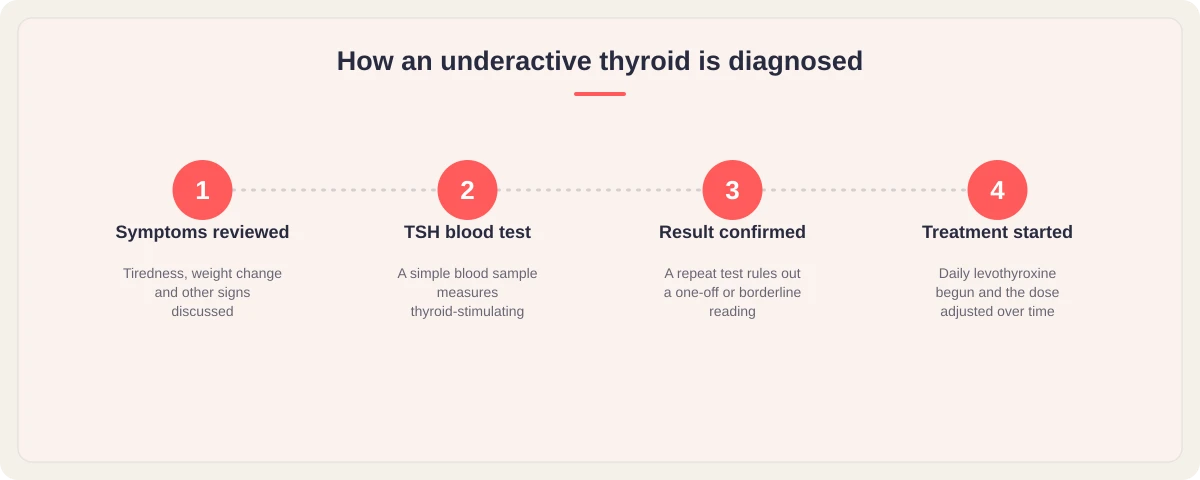
An underactive thyroid can't be confirmed by symptoms alone, since they overlap with so many other conditions. The only reliable way to diagnose it is a blood test measuring thyroid-stimulating hormone (TSH), the signal the brain's pituitary gland sends to ask the thyroid for more hormone. A raised TSH, often alongside a low free T4 reading, points to an underactive thyroid.
Because a single reading can occasionally be a borderline blip, a clinician will usually want to see the pattern confirmed, sometimes with a repeat test a few weeks later, before starting treatment. Thyroid antibody tests, most often for TPO antibodies, can also help identify whether an autoimmune process is behind the result.
Testing isn't only for people with obvious symptoms. Anyone with a family history of thyroid problems, another autoimmune condition, or who is planning a pregnancy may be advised to test even with mild or no symptoms, since early treatment tends to be simpler than catching things later.
Common causes and who's more at risk
In the UK, the most common cause by far is an autoimmune condition called Hashimoto's thyroiditis, where the immune system mistakenly attacks the thyroid gland and gradually reduces how much hormone it can make. Other causes include previous thyroid surgery, radioactive iodine treatment, certain medicines (including some used for heart rhythm problems or bipolar disorder), and, less commonly, a lack of iodine in the diet.
Some people are more likely to develop an underactive thyroid than others, including those with a family history of thyroid problems, other autoimmune conditions (such as type 1 diabetes or coeliac disease), women who have recently given birth, and anyone who has previously had thyroid surgery or radiotherapy to the neck. A temporary underactive thyroid can also follow pregnancy, usually settling on its own within a year, though it's still worth having it checked rather than assumed.
How treatment works
Treatment is usually straightforward: a daily tablet called levothyroxine, which replaces the hormone the thyroid isn't making enough of. It's taken on an empty stomach, typically first thing in the morning, at least 30 minutes before food, tea or coffee, since these can affect how well it's absorbed.
Most people start on a low dose, which is then adjusted gradually based on blood test results, usually rechecked around six to eight weeks after any dose change. Some people notice an improvement within a few weeks; for others it can take a few months to feel the full benefit. Taking too much can cause its own symptoms, such as a racing heart or feeling jittery, which is why dose changes are made in small steps and checked with a blood test rather than adjusted by feel. Once the dose is settled and levels are stable, monitoring typically drops to about once a year.
An underactive thyroid caused by Hashimoto's or previous treatment usually can't be reversed, so levothyroxine is normally needed for life. That said, with the right dose in place, most people feel well and see their symptoms well controlled, and levothyroxine itself is a well-established, generally well-tolerated medicine with a long track record of use.
Living with an underactive thyroid
Once treatment is established, an underactive thyroid shouldn't stop you doing anything you'd otherwise do. It's worth being consistent about taking levothyroxine at the same time each day, and mentioning it if you're prescribed a new medicine, since several common drugs (including some antacids, iron and calcium supplements) can interfere with absorption if taken too close together.
If you become pregnant or are planning to, let a clinician know as soon as possible, thyroid hormone needs often increase in pregnancy and levels are monitored more closely. Any new or returning symptoms after your dose has settled, such as renewed tiredness or unexplained weight change, are worth flagging rather than waiting for the next routine check, since they can be a sign the dose needs revisiting.
Diet and lifestyle can support how you feel day to day, but they don't replace treatment: a balanced diet, regular movement and enough sleep all help general energy levels, though the underlying hormone shortfall still needs to be corrected with medication.
Getting tested
If you recognise several of the symptoms above and they've lasted more than a few weeks, a thyroid blood test is a reasonable next step. This can be arranged through your GP, or privately if you'd prefer a faster turnaround or want to test alongside other hormone markers, such as those linked to fatigue, mood or periods.
A private hormone test panel gives you a clear result to bring to a clinician, along with guidance on what it means and what, if anything, to do next. If a test does point to an underactive thyroid, follow-up care and any prescription for levothyroxine is arranged through your GP or a suitable clinician, so the result feeds straight into the next step rather than sitting unexplained.
Frequently asked questions
What are the first signs of an underactive thyroid?
Tiredness, weight gain, feeling unusually cold and low mood are among the earliest and most common signs. They tend to build up gradually, so it's often the combination, rather than any single symptom, that stands out.
Can an underactive thyroid be reversed?
Usually not: most cases in the UK are caused by an autoimmune process that permanently reduces the thyroid's output, so daily levothyroxine is typically needed long term. With the right dose, though, symptoms are normally very well controlled.
How long does it take to feel better after starting treatment?
Some people notice an improvement within a few weeks of starting levothyroxine or adjusting the dose, while for others it takes a few months. Blood tests around six to eight weeks after any change help guide whether the dose needs adjusting further.
Can stress cause an underactive thyroid?
There's no good evidence that stress on its own causes hypothyroidism. The most common UK cause is an autoimmune condition (Hashimoto's thyroiditis), though stress can make existing symptoms, such as fatigue and low mood, feel more noticeable.
Is a home thyroid blood test accurate?
Home finger-prick kits measure the same core markers, such as TSH, that a clinic test does, and are generally reliable when done correctly. The real value comes from having the result interpreted by a clinician who can put it in context and advise on next steps.
Does an underactive thyroid affect fertility or pregnancy?
Untreated, it can affect periods and fertility, and thyroid hormone needs often rise during pregnancy. If you're pregnant, trying to conceive, or already on levothyroxine, it's worth telling a clinician promptly so levels can be monitored more closely.