
Fexofenadine: what it is used for, how it works and how to take it
 Clinically reviewed by the My London Pharmacy clinical team
·24 November 2026
·7 min read
·Reviews on Trustpilot
Quick answer
Fexofenadine is a non-sedating antihistamine. The 120mg strength is licensed for hay fever and 180mg for chronic hives (urticaria) in adults. It starts working within about an hour, lasts 24 hours, and causes less drowsiness for most people than older antihistamines like cetirizine.
fexofenadine">What is fexofenadine?
Fexofenadine is a second-generation antihistamine, meaning it blocks the effects of histamine, the chemical your body releases during an allergic reaction, without crossing into the brain as readily as older, first-generation antihistamines such as chlorphenamine. This is why it is generally described as non-sedating: for most people it causes noticeably less drowsiness than those older options.
It is sold in the UK under various brand and generic names, and is widely available from pharmacies without a prescription at the lower strength. It belongs to the same antihistamine family as cetirizine and loratadine, though the three medicines are not identical and some people respond better to one than another.
Histamine is released by your immune system when it mistakenly reacts to something harmless, such as pollen, dust mites or pet dander, as if it were a threat. That release is what causes the familiar allergy symptoms: sneezing, a runny or blocked nose, itchy and watery eyes, and itchy skin. Fexofenadine works by blocking histamine from attaching to its receptors in the body, which stops those symptoms before they build up, rather than reversing them once they are already severe.
What is fexofenadine used for?
Fexofenadine has two main licensed uses in the UK, and the strength you take depends on which one applies to you.
The 120mg dose is licensed for the symptoms of seasonal allergic rhinitis, commonly known as hay fever: sneezing, an itchy or runny nose, and itchy, watery eyes caused by pollen. The 180mg dose is licensed for chronic idiopathic urticaria, a form of hives that causes itchy skin wheals persisting for six weeks or longer, where the trigger is often unclear.
Beyond these two licensed uses, pharmacists and prescribers sometimes also use fexofenadine for other allergic symptoms, such as perennial allergic rhinitis (year-round allergy symptoms, often linked to dust mites or pet dander) or reactions to insect bites, though these are used at a pharmacist's or prescriber's discretion rather than printed on the standard product licence.
It is worth being clear about what fexofenadine does not treat. It is not a decongestant, so while it will ease the itching, sneezing and runny-nose element of hay fever, a blocked nose that persists may need a separate decongestant alongside it. It also will not help with asthma symptoms, bacterial sinus infections or a cold, even though some of the symptoms can feel similar, so if your main problem is a persistently blocked nose with facial pain or green mucus, that is worth discussing with a pharmacist rather than assuming it is allergy-related.
Fexofenadine 120mg vs 180mg: which strength for what
The two strengths are not interchangeable by habit; they are matched to the condition being treated.
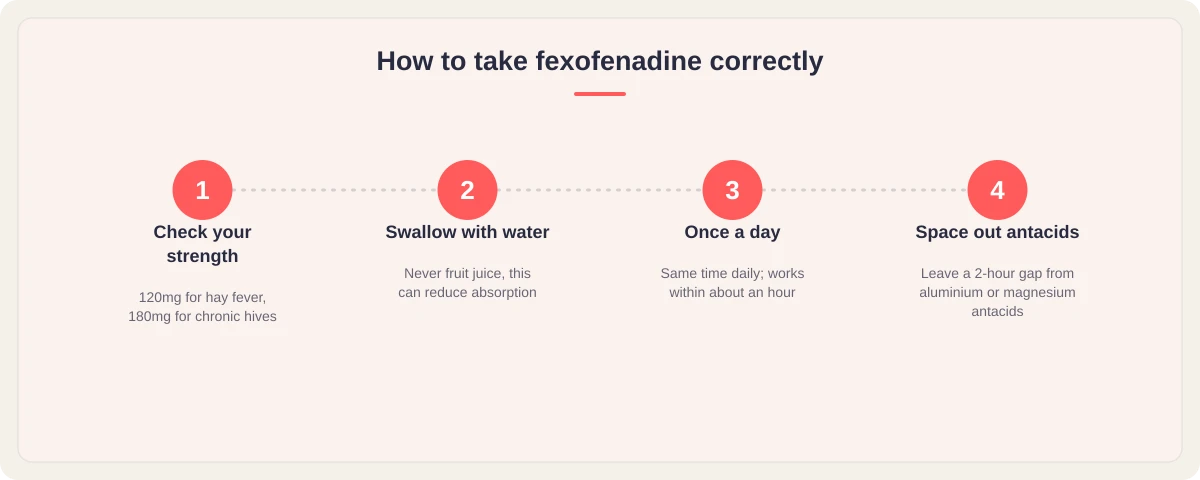
120mg is the standard dose for hay fever in adults and children aged 12 and over, taken once a day. It was reclassified from a prescription-only medicine to a pharmacy medicine in the UK in 2020, which is why a pharmacist can now supply it directly without a GP appointment for straightforward hay fever.
180mg is the standard dose for chronic urticaria in adults and children aged 12 and over, also taken once a day. If your hives have lasted more than six weeks, a pharmacist can advise whether 180mg is appropriate or whether you should see a GP, since persistent hives sometimes need further assessment.
Taking a higher dose than is licensed for your condition does not necessarily work faster or better, and is not something to do without advice, so stick to the strength that matches what you are treating.
How to take fexofenadine and how fast it works
Fexofenadine is taken as a tablet, swallowed whole with water, once a day. It is usually taken at the same time each day so the dose stays even in your system. It can be taken with or without food.
One detail that catches people out: fexofenadine should be taken with water, not fruit juice. Grapefruit, orange and apple juice have all been shown to reduce how much of the drug your body absorbs, which can make it less effective. If you take your antihistamine with your morning juice out of habit, it is worth switching that one tablet to a glass of water instead.
Most people notice it starting to work within about an hour, and a single dose lasts around 24 hours, which is why it is only taken once daily rather than several times a day like some older antihistamines.
If you know your hay fever season in advance, starting fexofenadine a few days before symptoms typically begin, rather than waiting until you are already sneezing and streaming, can make the first week or two more comfortable, since it gives the medicine time to build a steady effect before pollen levels rise. Once you are taking it daily through the season, there is no need to keep stopping and starting; consistent daily use tends to control symptoms more reliably than taking it only on bad days.
Side effects and drowsiness compared with other antihistamines
Fexofenadine is generally well tolerated. The most commonly reported side effects include headache, feeling sick, drowsiness and dizziness, though these affect only a minority of people. Because it is a non-sedating antihistamine, most people can drive and operate machinery as normal, though everyone reacts slightly differently and it is sensible to see how you feel on your first dose before relying on that.
Compared with cetirizine, another widely used second-generation antihistamine, fexofenadine tends to cause less drowsiness for most people, though cetirizine still causes less drowsiness than older, first-generation antihistamines such as chlorphenamine. If you have tried cetirizine and found it made you sleepy, fexofenadine is a reasonable one to try instead, and a pharmacist can talk you through the difference.
If you take indigestion remedies, check the gap. Antacids containing aluminium or magnesium (common in some heartburn and indigestion treatments) can reduce fexofenadine's absorption, so it is advised to leave a gap of around two hours between the two.
As with any medicine, a rare but serious allergic reaction to fexofenadine itself is possible, even though the drug's purpose is to treat allergies to other things. Signs to take seriously include swelling of the face, lips, tongue or throat, difficulty breathing, or a widespread rash appearing shortly after taking a dose. This is uncommon, but if it happens, stop taking it and seek urgent medical help rather than waiting to see if it settles.
Interactions, pregnancy and who should check with a pharmacist first
Fexofenadine has relatively few significant interactions compared with some medicines, but a few points are worth checking with a pharmacist before you start: antacids containing aluminium or magnesium (leave a two-hour gap, as above), and any other medicine you take regularly, so they can check nothing in your current list is affected.
If you are pregnant or breastfeeding, speak to a pharmacist or GP before taking fexofenadine. There is less safety data for antihistamines in pregnancy than for some other medicine groups, and a pharmacist can advise on the options generally considered more appropriate, or confirm whether fexofenadine is suitable for your situation.
You should also check first if you have severe kidney disease, since this can affect how the drug is cleared from your body, or if you are giving it to a child under 12, as dosing differs. If your symptoms do not improve after a week of regular use, or if hives last more than six weeks, it is worth a conversation with a pharmacist or GP rather than continuing to self-manage indefinitely.
Frequently asked questions
Can I take fexofenadine every day?
Yes, fexofenadine is designed for once-daily, ongoing use for as long as your symptoms need it, for example throughout hay fever season. It is not a medicine that needs to be rationed to occasional use, though if you are taking it continuously for more than a few weeks without improvement, it is worth checking in with a pharmacist.
Is fexofenadine the same as cetirizine or loratadine?
No. All three are second-generation antihistamines in the same family, but they are different molecules. Fexofenadine tends to cause less drowsiness for most people than cetirizine, and effectiveness can vary from person to person, so it is reasonable to try a different one if your current antihistamine is not suiting you.
Can I drink alcohol while taking fexofenadine?
Fexofenadine is non-sedating for most people, so it does not have the same marked interaction with alcohol as older antihistamines. That said, everyone responds differently, so it is sensible to see how you feel before assuming this applies to you, and moderate your drinking as you normally would.
What happens if I miss a dose?
Take it as soon as you remember, unless it is nearly time for your next dose, in which case skip the missed one and continue as normal. Do not take a double dose to make up for a missed one.
Can children take fexofenadine?
Fexofenadine 120mg and 180mg are licensed for adults and children aged 12 and over. For younger children, a pharmacist can advise on age-appropriate antihistamine options and dosing.
Why has fexofenadine stopped working for me?
If fexofenadine was previously effective and now seems less so, this is sometimes put down to the body adapting, though the evidence for true tolerance to antihistamines is limited. It is more often explained by a change in allergen exposure, a cold or infection mimicking allergy symptoms, or simply missed or inconsistent dosing. A pharmacist can help work out which applies to you.