
Infected insect bites: how to tell, and when they need antibiotics
 Clinically reviewed by the My London Pharmacy clinical team
·17 November 2026
·6 min read
·Reviews on Trustpilot
Quick answer
Most insect bites settle within two to three days with mild redness, swelling and itching that gradually fades. An infection is more likely if redness spreads beyond the bite, pain increases after 48 hours, or there's pus, warmth or fever. These signs, especially rapidly spreading redness or feeling unwell, need same-day assessment and may need antibiotics.
Normal reaction or infection? What a bite should look like day by day
A new insect bite, whether from a mosquito, midge, flea or an unidentified garden insect, almost always looks worse before it looks better. In the first day or so it is normal to see a small, raised, red bump that itches, sometimes with a little surrounding redness and mild swelling.
From around day two, a straightforward bite reaction should start to calm down rather than carry on getting worse. The itching typically peaks within the first one to two days, then gradually eases, and most bites are fully settled within a week with no treatment beyond basic self-care.
The clearest warning sign is the direction things are moving in. A normal bite gets better day by day; an infected one gets worse, particularly after the first 48 hours. If a bite still looks the same, or looks worse, two days after it appeared, it is worth checking for the specific signs of infection below rather than assuming it will settle on its own.
Signs a bite has become infected
An infected bite differs from a normal reaction in a few specific ways, and it usually involves more than one of these features at once:
- Spreading redness. The red area grows outward from the bite itself, rather than staying roughly the same size.
- Increasing pain after 48 hours. Pain that is getting worse, rather than settling, two days after the bite is a key signal.
- Pus or fluid. Any discharge from the bite, or a yellowish crust forming over it, points to a bacterial infection rather than a simple reaction.
- Warmth. The skin around the bite feels distinctly warmer than the surrounding skin.
- Fever or feeling generally unwell. A raised temperature, chills, or feeling unwell alongside the bite suggests the infection may be spreading beyond the skin.
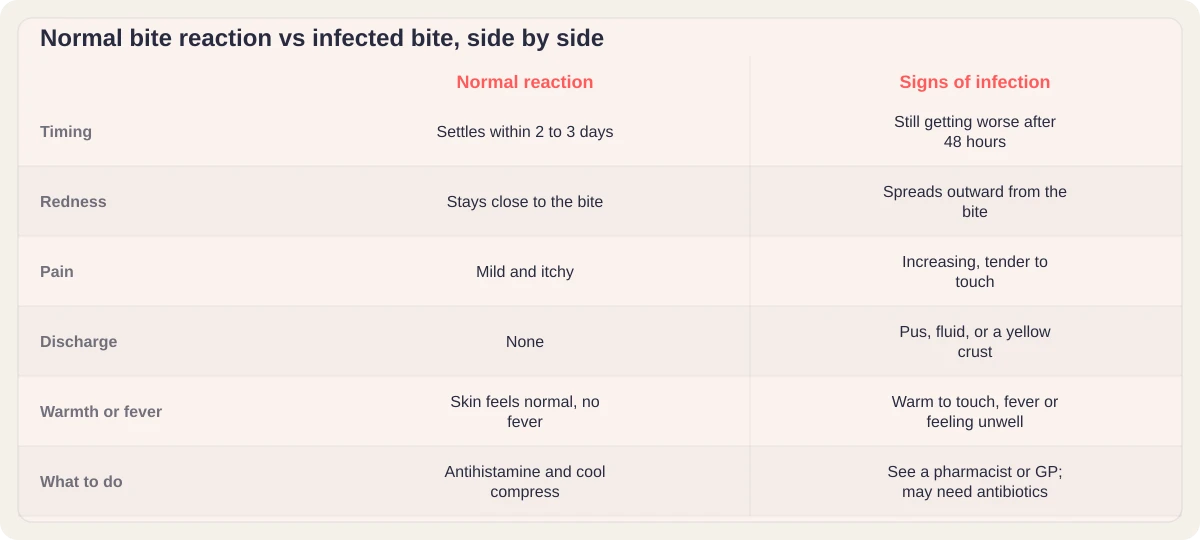
A single mild symptom, such as a bit more redness than you expected, is usually not a cause for concern on its own. It is the combination, and the direction of travel, that matters: a bite that is more red, more painful and warmer than it was 48 hours ago has crossed from a normal reaction into a likely infection.
Cellulitis and when a bite becomes a medical emergency
When a bacterial skin infection spreads into the deeper layers of skin, it is called cellulitis. This typically happens when scratching breaks the skin and lets bacteria that normally live harmlessly on the surface get in underneath.
Cellulitis usually appears as an area of red, hot, swollen, tender skin that spreads outward, sometimes with a visible border. It can come on over a day or two and tends to keep spreading if it is not treated.
Some features of a bite mean it needs assessment the same day, not a wait and see approach:
- Redness that is visibly spreading from hour to hour, rather than day to day
- Red streaks tracking away from the bite, toward the nearest lymph nodes
- A fever, chills, or feeling unwell alongside the skin changes
- A bite close to the eye, since infection there can threaten vision and spread quickly
Any of these need a same-day appointment with a GP, pharmacist prescribing service, or, if you feel significantly unwell, an urgent care assessment. Cellulitis responds well to prompt antibiotics, but delaying treatment makes it more likely to spread or need a longer course.
Self-care for an itchy, swollen bite
Most bites never reach this point, and respond well to simple self-care from the moment they appear:
- Avoid scratching. It is the main reason a harmless itchy bite becomes an infected one, since broken skin lets bacteria in.
- Cool compress. A clean, cool flannel or ice pack wrapped in a cloth, held on the bite for 10 to 15 minutes, reduces both itching and swelling.
- Antihistamine. A non-drowsy antihistamine such as Cetirizine 10mg tablet, taken as directed, calms the itching and swelling of a typical reaction.
- Short-term hydrocortisone. A thin layer of Hydrocortisone 1% can settle a particularly itchy or inflamed bite, used sparingly and only for a few days.
- Keep it clean. Wash the area with soap and water, and keep broken skin loosely covered to reduce the chance of bacteria getting in.
These measures are for a normal reaction. Once any of the infection signs above are present, self-care alone is no longer enough and the bite needs a clinical review rather than more time.
When antibiotics are used, and which ones
When a bite has become infected, or progressed to cellulitis, antibiotics are usually needed because the bacteria involved, most often a type of Staphylococcus or Streptococcus, will not clear on their own.
In the UK, flucloxacillin is the usual first-line antibiotic for cellulitis, following NICE guidance (NG141). It is taken as a short course of tablets, generally for five to seven days, and most people notice the redness and pain starting to ease within 48 hours of starting treatment.
For anyone allergic to penicillin, clarithromycin or doxycycline is used instead, since flucloxacillin belongs to the penicillin family. Whichever antibiotic is prescribed, it is important to complete the full course even once the skin starts to look better, to reduce the risk of the infection coming back or antibiotic resistance developing.
A clinician will also want to know about any known allergies, whether you are pregnant, and may suggest marking the edge of the redness with a pen, a simple way of confirming the antibiotics are working as the area shrinks back over the following days.
Preventing bites, and preventing infection
The best way to avoid an infected bite is to avoid being bitten in the first place, and to break the scratch and infect cycle quickly if you are:
- Use an insect repellent containing DEET, picaridin or a similar active ingredient on exposed skin, reapplying as directed, especially at dawn and dusk when mosquitoes are most active.
- Cover up with loose, long sleeves and trousers in areas with a lot of biting insects, particularly near water or long grass.
- Use a mosquito net over the bed if you are somewhere with a lot of biting insects at night, including some UK summer evenings and most destinations abroad.
- Keep nails short and treat itching early with an antihistamine or cool compress, rather than scratching through it.
- Check and treat pets for fleas, since flea bites on people are a common, easily missed source of repeated bites at home.
If you tend to react badly to bites, carrying a non-drowsy antihistamine when you travel or spend time outdoors in summer means you can treat a new bite early, before scratching has the chance to turn it into something that needs antibiotics.
Frequently asked questions
How long should a normal insect bite take to heal?
A straightforward bite usually peaks in itchiness within the first day or two, then gradually fades, with most bites fully settled within about a week. If a bite isn't improving by day three or four, or looks worse rather than better, it is worth checking for signs of infection.
Can I treat an infected insect bite myself, or do I need to see someone?
Early, mild redness can sometimes be watched for a short time with good hygiene, but once there is pus, spreading redness, increasing pain after 48 hours, warmth or fever, antibiotics are usually needed and a pharmacist or GP should assess it rather than waiting.
What does an infected bite actually look like compared with a normal one?
A normal reaction stays roughly the same size and starts fading within a day or two. An infected bite keeps spreading, becomes more painful rather than less, and may develop pus, warmth or a fever, usually within the first 48 hours.
Do all infected bites need antibiotics?
Most do, since the bacteria causing a true skin infection will not clear without treatment. In the UK, flucloxacillin is the usual first-line choice for cellulitis, with clarithromycin or doxycycline used instead for anyone allergic to penicillin.
When should I seek urgent medical help for an insect bite?
Seek same-day care for redness that is visibly spreading, red streaks running away from the bite, a fever or feeling unwell, or a bite near the eye. These signs suggest the infection may be spreading beyond the skin and need prompt antibiotics.
Can a spider bite or tick bite become infected in the same way?
Yes. Any bite that breaks the skin can become infected if bacteria get in, usually through scratching. A tick bite also needs its own check for a spreading red rash, which can be an early sign of Lyme disease rather than a simple infected bite.