
Mycoplasma genitalium: symptoms, testing and treatment
Quick answer
Mycoplasma genitalium is a bacterial infection that can cause urethritis, discharge or pelvic pain, though many people have no symptoms at all. It is diagnosed with a urine sample or swab and treated with a specific course of antibiotics, chosen partly because resistance to some antibiotics is becoming more common.
What is Mycoplasma genitalium?
Mycoplasma genitalium, often shortened to Mgen, is a small bacterium that can infect the urethra, cervix and other parts of the reproductive tract. It was only identified relatively recently compared with infections such as chlamydia and gonorrhoea, and because testing for it is not yet as widespread, many people have not heard of it even though it is passed on in the same way as other sexually transmitted infections (STIs).
It spreads through unprotected vaginal, anal or oral sex, and through sharing sex toys that have not been washed or covered with a new condom. It does not spread through everyday contact such as hugging, sharing towels or using the same toilet.
Mgen is not tested for as part of a standard STI screen in the UK. Current guidance from the British Association for Sexual Health and HIV (BASHH) recommends testing only when there are relevant symptoms or a specific reason to suspect it, rather than as routine screening for everyone, partly because the bacterium is naturally slow-growing and can be harder to interpret on a test than other infections.
Anyone who is sexually active can be exposed to it, and it is thought to be reasonably common, though exact figures are hard to pin down precisely because so much of it goes undiagnosed. It is worth thinking of it as one of a family of bacterial STIs alongside chlamydia and gonorrhoea, rather than as something separate or unusual, and treating it with the same practical, unembarrassed approach.
Symptoms, or the absence of them
Most people with Mycoplasma genitalium notice no symptoms at all, which is one of the main reasons it can be passed on without either partner realising. When symptoms do appear, they typically develop one to three weeks after exposure, though they can take much longer to show.
In men, the most common sign is urethritis: irritation or inflammation of the urethra that can cause a burning sensation when passing urine, or a clear or cloudy discharge from the tip of the penis.
In women, symptoms can include unusual vaginal discharge, pain or discomfort during sex, bleeding between periods or after sex, and lower tummy pain. Left untreated, it has been linked to cervicitis and, less commonly, pelvic inflammatory disease.
Because these symptoms overlap closely with chlamydia, gonorrhoea and other infections, a symptom pattern on its own cannot confirm Mgen. A specific test is needed to know for certain.

How testing works
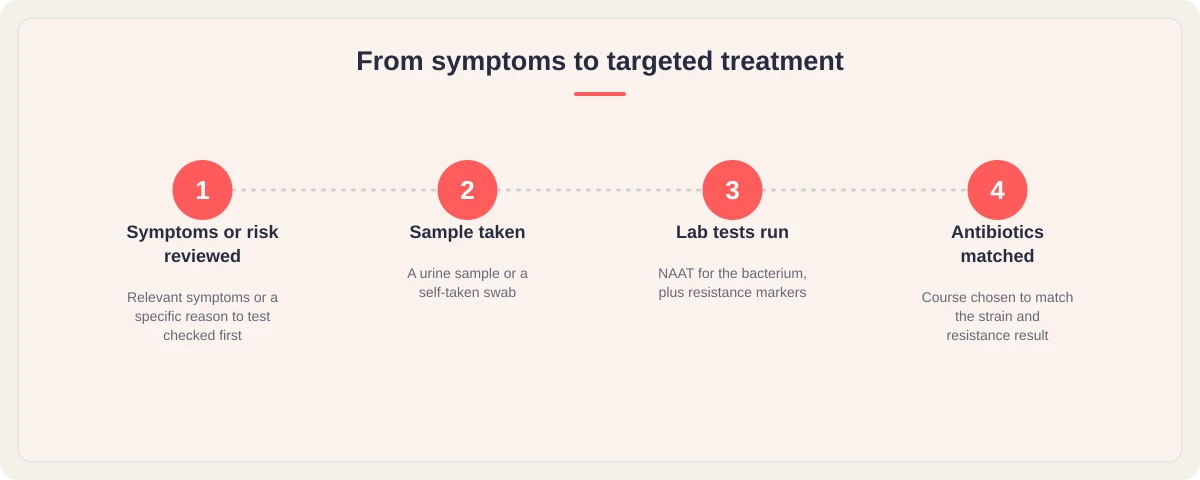
Testing for Mycoplasma genitalium uses a nucleic acid amplification test (NAAT), a highly sensitive lab method that looks for the bacterium's genetic material rather than trying to culture it directly, since Mgen grows too slowly in a lab to make culture practical.
The sample itself is straightforward: a first-catch urine sample for men, and a vulvovaginal or cervical swab for women, which can often be self-taken. Rectal and throat swabs may be used if relevant, based on the sex you have.
Where a test comes back positive, many UK labs will also run a resistance test on the same sample, looking for genetic markers linked to resistance against a commonly used antibiotic. This result helps a clinician choose the treatment most likely to clear the infection first time, rather than needing to try more than one course.
Because it is not part of routine screening, a Mgen test usually has to be specifically requested, whether through a sexual health clinic, a GP or a pharmacy consultation. It is worth being clear with whoever arranges the test that you have symptoms or a reason to be tested for Mgen specifically, rather than assuming a general STI screen will automatically include it.
Treatment and antibiotic resistance
Mycoplasma genitalium is treated with antibiotics, but the approach is more tailored than for many other bacterial STIs. Current UK guidance sets out a resistance-guided course: typically one antibiotic taken for about a week, followed by a second, different antibiotic, with the exact combination chosen according to whether resistance markers were found on testing.
This staged approach exists because Mgen has become increasingly resistant to some of the antibiotics that used to be used against it, a pattern that has developed over the past decade or so as the infection has been treated more often. Taking the full course exactly as prescribed, even once symptoms ease, gives the treatment the best chance of clearing the infection and helps slow further resistance developing.
A test of cure, a repeat test a few weeks after finishing treatment, is generally recommended to confirm the infection has cleared, particularly where resistance was identified or symptoms persist.
Telling partners
If you are diagnosed with Mycoplasma genitalium, current partners, and often recent partners from the past few months, are usually advised to be tested and treated too, even if they have no symptoms. This is sometimes called partner notification, and a sexual health clinic can help with this discreetly, including contacting partners on your behalf without using your name if you would prefer.
It is generally recommended to avoid sex, including with a regular partner, until you and any partners who need treatment have finished your course and any advised follow-up period has passed. This helps prevent the infection passing back and forth between partners, sometimes called a ping-pong effect, which can also encourage resistance to develop.
Possible complications if left untreated
For many people, Mycoplasma genitalium causes no lasting harm once it is identified and treated. Left untreated for a long period, however, it has been associated with pelvic inflammatory disease in women, which can in turn affect fertility, and with ongoing urethritis or epididymitis in men.
In pregnancy, untreated infection has been linked to a higher chance of preterm birth in some studies, which is one reason clinicians take reported symptoms seriously during pregnancy rather than assuming they are unrelated.
These outcomes are not common, and they are far less likely when the infection is identified and treated appropriately, which is another reason testing matters when symptoms or risk factors are present rather than waiting to see if things settle on their own.
Reducing your risk and when to get tested
Using condoms consistently for vaginal, anal and oral sex, and for shared sex toys, remains the most effective way to reduce the chance of passing on Mycoplasma genitalium and most other STIs. Regular sexual health check-ups are also worthwhile if you have new or multiple partners, even without symptoms, though Mgen itself is only tested for when there is a specific reason to.
It is worth requesting a Mgen test specifically if you have symptoms of urethritis or cervicitis that have not responded to standard chlamydia or gonorrhoea treatment, if a partner has been diagnosed with it, or if you have ongoing pelvic pain without another clear explanation.
Do not feel you need to already have all the answers before reaching out. A clinician can help work out whether Mgen testing is the right next step for your symptoms, alongside checking for other, more commonly tested infections at the same time.
If any of this sounds familiar, or you simply want a clearer picture of your sexual health, a confidential consultation is a straightforward way to talk through your symptoms, arrange the right test, and get advice suited to your situation.
Frequently asked questions
Is Mycoplasma genitalium a sexually transmitted infection?
Yes. It is a bacterium passed on through unprotected vaginal, anal or oral sex, and through sharing sex toys that have not been washed or covered with a new condom. It is one of the less well-known STIs, but it is transmitted in the same ways as chlamydia and gonorrhoea.
Do I need to be tested for Mycoplasma genitalium?
It is not part of a routine STI screen in the UK. Testing is generally recommended if you have symptoms such as unusual discharge or discomfort passing urine, if a partner has been diagnosed with it, or if a previous chlamydia or gonorrhoea treatment has not resolved your symptoms.
How is Mycoplasma genitalium treated?
It is treated with a course of antibiotics, usually two different antibiotics used in sequence. The exact combination is guided by whether resistance markers are found on your test, so treatment can be matched to the strain rather than using a one-size-fits-all approach.
Can Mycoplasma genitalium come back after treatment?
A repeat test, sometimes called a test of cure, is often recommended a few weeks after finishing treatment to confirm it has cleared. Reinfection is also possible if a partner has not also been tested and treated, which is why partner testing matters.
Should my partner be tested too?
Yes, current and recent partners are usually advised to be tested and treated, even without symptoms. This reduces the chance of the infection passing back and forth, and a sexual health clinic can help notify partners discreetly if you would prefer not to do this yourself.