
Sports and fitness blood tests: what active people should know
Quick answer
Sports and fitness blood tests look at markers such as iron, vitamin D, thyroid function and testosterone that can affect energy, recovery and training. They are not a routine NHS test for most healthy adults, but can help explain persistent fatigue, plateaued performance or slow recovery when checked as part of a proper consultation.
What are sports and fitness blood tests?
Sports and fitness blood tests are panels aimed at people who train regularly, whether that is running, gym-based training, team sport or general high activity levels. Rather than looking for a single condition, they check a group of markers known to influence energy, recovery and training capacity, things a standard health check does not always cover in detail.
They are not a diagnosis on their own. A result outside the expected range is a starting point for a conversation with a clinician, not a verdict, and results are always best interpreted alongside your symptoms, training load and medical history.
They are also not aimed only at competitive athletes. Anyone training consistently, whether for a first 10k, regular gym sessions or a physically demanding job, can have the same underlying issues, such as low iron or a thyroid change, that affect energy and recovery.
Why active people consider blood testing
Most people who ask about sports blood tests are dealing with one of a few things: fatigue that does not improve with more sleep, a performance plateau despite consistent training, slower recovery between sessions, or general questions about whether their diet and training are supporting their body properly.
Blood tests will not fix any of these on their own, but they can rule out or confirm a physical cause, such as a nutrient shortfall or a hormone or thyroid pattern that needs attention, so that time and effort go into the right next step.
It is worth being honest about what testing can and cannot explain. Poor sleep, an unrealistic training schedule or simple overreaching in the short term will not always show up on a blood test, and a normal result does not rule these out. Testing works best alongside a look at training load, diet and recovery, not instead of it.
The markers most sports panels cover
There is no single standard sports panel, but most cover a similar core set of markers because of how directly they relate to training and recovery:
- Iron and ferritin, since low iron stores are a common and often overlooked cause of fatigue in people who train hard, particularly endurance athletes and menstruating women.
- Full blood count, which gives a picture of red and white blood cells and can flag anaemia or signs the body is under strain.
- Vitamin D, which supports bone and muscle function and tends to run low over the darker months in the UK regardless of activity level.
- Thyroid function (TSH), since an underactive or overactive thyroid can affect energy, weight and recovery in ways that are easy to mistake for overtraining.
- Testosterone, which can be suppressed by a combination of heavy training load, low energy availability and poor sleep.
- Vitamin B12 and folate, both needed for red blood cell production and nervous system health.
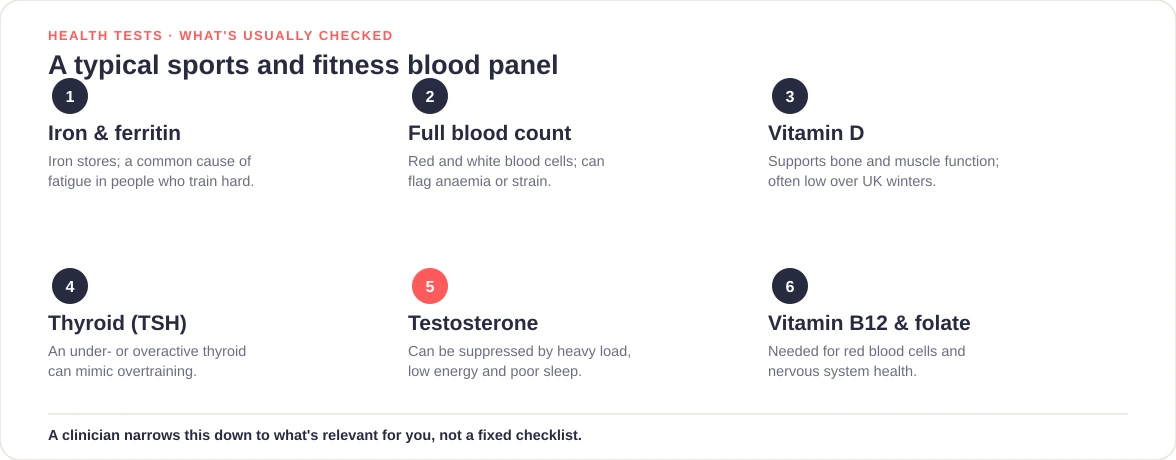
A clinician will usually narrow this down to what is relevant for you rather than testing everything at once, based on your symptoms, training and any relevant medical history.
Iron, ferritin and unexplained fatigue
Iron deficiency without full-blown anaemia is one of the more common findings in people who train regularly, especially those on restricted diets, endurance athletes, and women who have heavy periods. Ferritin, the marker used to estimate iron stores, can sit towards the lower end of the normal range and still leave someone feeling persistently tired, short of breath on exertion, or unable to recover properly between sessions.
This is worth checking rather than guessing, because iron supplements are not appropriate for everyone and taking them without a confirmed shortfall will not help, and can occasionally cause harm, including digestive side effects and, over time, iron building up to levels that are unsafe for some people. A blood test is the only reliable way to know whether iron is actually the issue before considering any supplement.
Testosterone, thyroid and overtraining
Training hard without enough recovery, sleep or food to match it can, over time, affect the hormonal signals the body relies on, including testosterone in men and the menstrual cycle in women. Persistent low mood, disturbed sleep, a falling libido or periods becoming irregular alongside heavy training are all reasons to get this looked at rather than pushing through.
Thyroid problems can produce a similar picture of fatigue, weight changes and poor recovery, and are picked up with a simple TSH blood test. Because thyroid and overtraining symptoms overlap so closely, testing is often the quickest way to tell them apart, rather than assuming more rest or a change in training alone will resolve it.
When and how often to test
There is no need for healthy adults training at a moderate level to test routinely. Testing is more useful when there is a specific reason: unexplained fatigue, a performance plateau that has not responded to changes in training or diet, symptoms that suggest a hormone or thyroid issue, or before starting a significantly heavier training block.
If a first test shows a marker outside the expected range, a clinician may suggest a repeat test after a period of treatment or dietary change to check it has moved in the right direction, rather than testing on a fixed schedule. Testing too frequently without a clear reason rarely adds useful information and can lead to over-interpreting small, normal fluctuations.
NHS testing versus private sports panels
The NHS will investigate symptoms with blood tests when a GP judges it clinically necessary, and this remains the right first step if you have concerning symptoms, such as significant unexplained fatigue, heavy bleeding or a suspected underlying illness. NHS testing is symptom-led and focused on ruling in or out specific conditions, rather than offering a broad sports-specific screen.
A private sports or fitness panel is generally broader and can include markers, such as free testosterone or a wider hormone picture, that would not routinely be requested for a healthy adult without a clear clinical indication. This can be useful for active people who want a fuller picture of factors affecting training and recovery, provided results are reviewed by a clinician who understands the context, rather than interpreted alone.
Getting started safely
The most useful starting point is a consultation where a clinician can ask about your symptoms, training and diet, and use that to decide which markers are actually worth checking, rather than working through a generic list. This keeps testing relevant and avoids over-interpreting results that were never a good fit for your situation in the first place.
If a result does come back outside the expected range, treat it as information to act on with guidance, whether that means a dietary change, a supplement only where genuinely needed, or a wider check for an underlying cause, rather than something to self-manage from a lab report alone.
Frequently asked questions
Do I need a blood test if I feel fine and I'm training well?
Not usually. Routine sports blood testing is most useful when there is a specific concern, such as fatigue, a performance plateau or symptoms that suggest a hormone or thyroid issue, rather than as a routine check for someone who feels well and is progressing as expected.
How is a sports blood test different from a routine NHS blood test?
An NHS blood test is usually requested when you have symptoms and focuses on ruling out or confirming a specific condition. A sports or fitness panel is broader and looks at markers relevant to training and recovery, such as iron, vitamin D and testosterone, which are not always included in a standard NHS check for a healthy adult.
Can low iron affect performance even without anaemia?
Yes. Iron stores, measured as ferritin, can be low enough to cause fatigue and poor recovery before red blood cell levels drop far enough to be classed as anaemia. This is one of the more common reasons active people feel persistently tired despite normal training and sleep.
How often should active people get tested?
There is no fixed schedule for most healthy adults. Testing is generally guided by symptoms or a specific change, such as starting a heavier training block, rather than repeated at set intervals, though a clinician may suggest a follow-up test to check a previous result has improved.
Will a blood test tell me if I'm overtraining?
Not directly. There is no single marker for overtraining, but blood tests can rule out or identify related causes, such as low iron, thyroid changes or suppressed testosterone, that often sit behind the fatigue and poor recovery associated with it.
Is it safe to start taking iron or vitamin D supplements without testing first?
It is better to confirm a shortfall with a blood test first. Taking iron without a confirmed need will not improve fatigue caused by something else, and can cause side effects, while vitamin D is generally safer at standard doses but a test still helps confirm whether a higher dose is actually needed.