
Testosterone gel for TRT: Testogel, Tostran and Testavan explained
 Clinically reviewed by the My London Pharmacy clinical team
·10 November 2026
·7 min read
·Reviews on Trustpilot
Quick answer
Testogel, Tostran and Testavan are the testosterone gels licensed for TRT in the UK. All deliver testosterone through the skin, but they differ in strength, how they are dispensed and where you apply them. A clinician helps decide which gel, or whether injections, suit you, based on your blood tests, lifestyle and how you prefer to take treatment.
What is testosterone gel, and how does it work?
Testosterone gel is one way of taking testosterone replacement therapy (TRT) for men diagnosed with low testosterone (hypogonadism). Rather than an injection, the testosterone is absorbed through the skin and into the bloodstream gradually over the course of each day, which tends to give steadier levels than some other delivery methods.
In the UK, three testosterone gels are licensed and commonly prescribed: Testogel, Tostran and Testavan. All three contain testosterone as the active ingredient and work in broadly the same way, but they are not interchangeable without a clinician's input, because the strength, dose per application and application site all differ between them.
Gel is usually considered alongside other TRT options, such as injections or, less commonly in the UK, implants or patches. The right choice depends on your symptoms, blood results, lifestyle and how you feel about a daily routine versus a less frequent dose.
Testogel, Tostran and Testavan: how the three brands differ
The three gels are all prescription-only testosterone products, but they are formulated and dispensed differently:
- Testogel is a 1% gel, available either as single-dose sachets or from a metered-dose pump dispenser. It is usually applied to clean, dry skin on the shoulders, upper arms or abdomen.
- Tostran is a 2% gel delivered from its own metered-dose pump. It is usually applied to the abdomen or the front and inner thighs, with the exact application site rotated day to day to reduce irritation.
- Testavan is also a 2% gel from a metered-dose pump, usually applied to one upper arm and shoulder, or the abdomen. It is formulated to dry quickly, which is intended to reduce how long the gel sits wet on the skin and so lower the chance of it transferring to someone else.
The exact number of pump actuations or sachets you need is set by your prescriber and adjusted after blood tests, not chosen by you. Do not swap between brands, or between a sachet and a pump product, without checking with the clinician managing your treatment first, as the strength per dose is not the same across products.
If one gel is not suiting your skin, or the application routine does not fit your day, it is usually possible to try a different brand rather than assuming gel is not for you at all.
How to apply testosterone gel correctly
However it is dispensed, testosterone gel is usually applied once a day, at around the same time each day, which most men find easiest to build into a morning routine. A few points matter for both effectiveness and safety:
- apply to clean, dry, unbroken skin, never to the genitals;
- spread it over the recommended area rather than one small patch, without rubbing it in too hard;
- let the gel dry fully, which can take several minutes, before dressing;
- wash your hands straight away after applying, unless your hands were the application site;
- cover the area with clothing once it has dried;
- rotate the exact spot slightly each day to reduce skin irritation.
Check the patient information leaflet for your specific product for guidance on washing, swimming or sweating heavily after application, as the recommended wait varies between brands. If you are unsure, your pharmacist or prescriber can confirm the timing for the gel you have been given, and can also advise what to do if you shower sooner than planned on an occasional day.
Consistency matters more than exact timing down to the minute. Applying it roughly the same time each day helps keep your levels steadier and makes it easier to remember, which in turn makes missed doses less likely.
Gel or injections: which suits you?
The table below sets out how gel and injectable testosterone generally compare, so you can see where each one tends to fit.
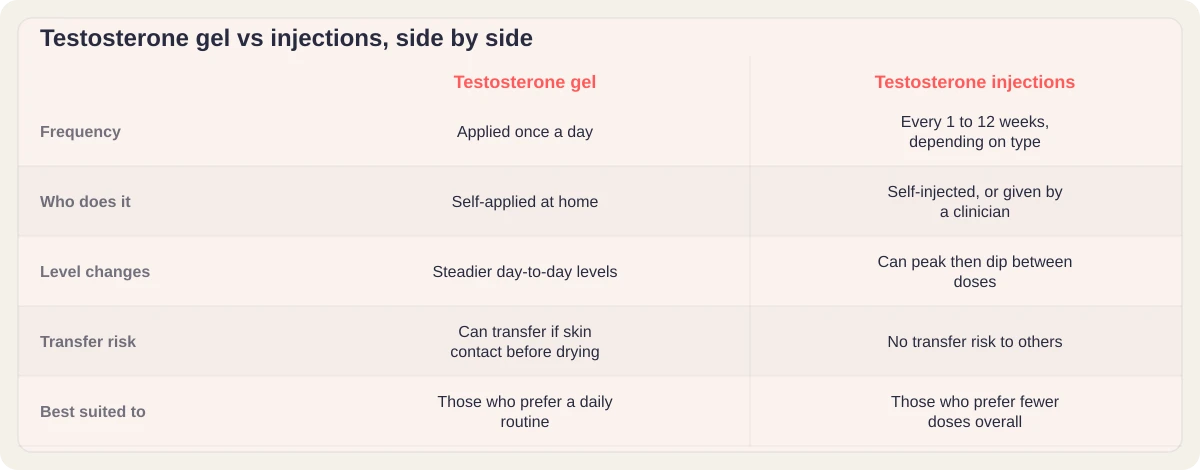
Neither option is automatically better; it depends on how you feel about daily skin application versus a less frequent injection, your skin's tolerance, whether needles bother you, and whether the transfer risk from gel is a practical concern in your household. Some men who start on one method later switch to the other once they know how their body responds and which routine fits their life. A clinician can talk through both with you before you start, and again at review if your circumstances change.
Common side effects of testosterone gel
Most men tolerate testosterone gel well, but some effects are worth knowing about:
- skin irritation, redness or itching at the application site, which is the most common issue;
- oily skin or acne, particularly in the first few months;
- mood changes or irritability if the dose needs adjusting;
- fluid retention or breast tenderness in some men;
- headache or changes in sleep pattern, which usually settle as your body adjusts.
Skin reactions can often be managed by rotating the application site, allowing more drying time, or, if needed, switching to a different brand. Report any persistent skin problems, or symptoms such as breathlessness, leg swelling or chest pain, to your prescriber promptly rather than stopping treatment abruptly without advice, since your dose may simply need reviewing rather than treatment stopping altogether.
Transfer risk: protecting children and partners
Testosterone gel can transfer to someone else's skin through direct contact while it is still wet, and this is one of the main safety differences from an injection. Accidental exposure matters most for children and for partners who are pregnant or breastfeeding, because absorbed testosterone can affect them, including, in children, early signs of puberty such as enlarged genitals or early pubic hair.
To reduce this risk: apply the gel to an area that will be covered by clothing, let it dry completely before any skin-to-skin contact, wash your hands after applying, and wash the application site with soap and water before close contact if you are not sure it has fully dried. Avoid sharing a bed or close physical contact in the minutes right after applying, and keep the gel itself well out of reach of children, as direct contact with the product is a bigger risk than contact with dried skin.
If a child or partner does come into contact with wet gel, wash the affected area promptly with soap and water and mention it to your GP or prescriber, particularly if it happens more than once or if you notice any unusual physical changes in them.
Monitoring while you are on testosterone gel
Starting testosterone gel is not a one-off decision; it comes with a monitoring schedule. This typically includes repeat blood tests, usually a few weeks after starting or after any dose change, to check your testosterone level sits in a healthy range rather than too high or too low. Ongoing checks commonly include full blood count, and, depending on your age and personal or family history, prostate health.
Monitoring usually continues for as long as you stay on treatment, with reviews spaced out once your dose has settled, often moving to roughly every 6 to 12 months once things are stable. Tell your prescriber about any new medicines, significant weight change, or new symptoms that develop between reviews, since these can all affect how well your current dose is working and whether an adjustment is needed sooner than your next scheduled check.
Frequently asked questions
Can I switch between testosterone gel and testosterone injections?
Yes, in most cases. If a gel is not suiting you, or you would prefer a less frequent routine, your prescriber can switch you to an injectable testosterone instead, adjusting the dose and repeating blood tests after the change.
How soon does testosterone gel start working?
Some men notice better mood or energy within a few weeks, but physical changes take longer, often several months, and are properly assessed with review blood tests rather than by how you feel day to day.
Can testosterone gel be harmful to someone else if they touch it?
Yes, if wet gel transfers to another person's skin, especially a child or a pregnant partner, it can be absorbed and cause problems such as early signs of puberty in a child. Let the area dry fully, cover it with clothing, and wash your hands after applying.
Does testosterone gel affect fertility?
TRT, including gel, can reduce natural testosterone and sperm production over time, so fertility plans are worth discussing with a clinician before you start, particularly if you may want to have children in the future.
What happens if I forget to apply a dose?
Apply it as soon as you remember that day. If you miss a whole day, do not double up the next day; just continue as normal and mention any missed doses at your next review.
Is testosterone gel available on the NHS?
It can be, if you meet the clinical criteria for TRT and your GP agrees it is appropriate, though access and the specific brand funded can vary by local NHS area. Private pharmacy-led services are also an option if you would rather not wait.