
Vitamin B12 deficiency: symptoms, testing and treatment explained
Quick answer
Vitamin B12 deficiency can cause tiredness, pins and needles, mouth ulcers and low mood, and if left untreated it can affect the nervous system. It is confirmed with a blood test, and treatment depends on the cause: injections if absorption is the problem, or tablets and dietary changes if intake is too low.
What is vitamin B12 deficiency?
Vitamin B12 is essential for making healthy red blood cells, keeping the nervous system working properly, and supporting normal DNA production throughout the body. It is found mainly in animal foods, and the body stores several years' worth in the liver, which is one reason a deficiency can take a long time to develop and, once it starts causing symptoms, a while to fully correct.
A deficiency happens either because someone is not getting enough vitamin B12 from their diet, or because the body cannot absorb it properly even when intake looks adequate. Absorbing B12 from food is a multi-step process that relies on stomach acid, a protein called intrinsic factor, and a healthy final section of the small intestine, so a problem at any of these stages can lead to deficiency even in someone eating a varied diet.
Left untreated, vitamin B12 deficiency can eventually damage the nervous system, and some of that damage can become permanent if it is not picked up and treated in good time. This is why it is worth taking persistent, unexplained symptoms seriously rather than assuming they will pass on their own.
What causes vitamin B12 deficiency?
The two broad causes are not eating enough vitamin B12 and not absorbing it properly. Dietary deficiency is more likely in people following a vegan diet, since B12 occurs almost exclusively in animal foods, and can also affect vegetarians or anyone with a limited or unbalanced diet over a long period.
Pernicious anaemia is the most common cause of an absorption problem in the UK. It is an autoimmune condition in which the body attacks the cells that make intrinsic factor, the protein needed to absorb B12 in the gut, so even a normal diet cannot make up the shortfall. It often runs alongside other autoimmune conditions, such as an underactive thyroid, and tends to become more common with age.
Other causes of poor absorption include conditions affecting the stomach or gut, such as coeliac disease, Crohn's disease, or previous stomach or bowel surgery, including weight-loss surgery. Reduced stomach acid, which becomes more common in older adults, can also make it harder to release B12 from food. Certain long-term medicines, including metformin and some acid-suppressing tablets used for reflux, are also known to reduce how much B12 the body absorbs over time.

Common symptoms to look out for
Symptoms usually build up gradually, so many people put them down to stress, poor sleep or simply getting older, rather than a vitamin deficiency. The most frequently reported signs include ongoing tiredness and low energy, pale or slightly yellowish skin, and a sore, red or unusually smooth tongue.
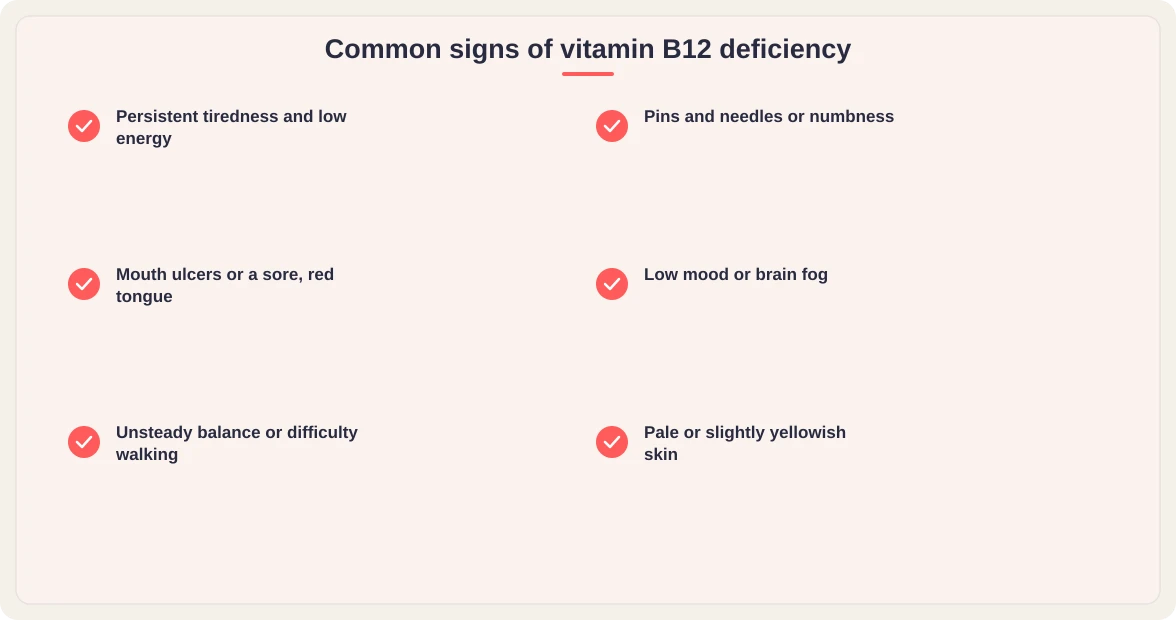
Nervous system symptoms are also common and worth paying particular attention to: pins and needles or numbness in the hands and feet, unsteady balance, and difficulty walking normally. Some people notice low mood, memory problems or difficulty concentrating, often described as brain fog, along with mouth ulcers, breathlessness on exertion and a fast heartbeat.
Not everyone gets every symptom, and how noticeable they are usually depends on how low levels have fallen and how long the deficiency has been building. Nervous system symptoms, in particular, are a signal to get checked promptly rather than wait, since this is the type of damage most likely to become permanent if it continues untreated.
Who is more likely to be affected?
Older adults are at higher risk, partly because stomach acid tends to reduce with age, making it harder to release B12 from food, and partly because pernicious anaemia becomes more common later in life. People following a vegan diet, and some vegetarians with a limited diet, are also more likely to become deficient unless they eat fortified foods or take a supplement.
Anyone with a digestive condition that affects absorption, such as coeliac disease or Crohn's disease, or anyone who has had stomach or bowel surgery, is at increased risk. People with another autoimmune condition, such as an underactive thyroid or type 1 diabetes, are more likely to also have pernicious anaemia. Long-term use of metformin or certain reflux medicines can gradually reduce B12 levels too, so anyone on these for years is worth keeping an eye on.
Pregnant and breastfeeding women have higher B12 requirements and should discuss their levels with a midwife or GP if they follow a vegan or restricted diet. A family history of pernicious anaemia is also a relevant factor, since the condition can run in families.
How is it diagnosed?
A blood test is the only reliable way to confirm vitamin B12 deficiency, since the symptoms overlap with many other conditions. The main test measures serum B12 in the blood, and a full blood count is usually done alongside it, as B12 deficiency can cause red blood cells to become larger than normal.
Results are not always perfectly clear-cut. A borderline result may be followed up with a more specific test, such as active B12 or a marker called methylmalonic acid, to build a clearer picture before starting treatment. If pernicious anaemia is suspected, a test for intrinsic factor antibodies can help confirm the diagnosis, since this changes how long treatment is likely to be needed.
A clinician reviewing your results will usually consider your symptoms, diet and medical history alongside the numbers, rather than a single figure in isolation, because the right test and the right interpretation depend on what is likely to be causing the deficiency in the first place.
How is vitamin B12 deficiency treated?
Treatment depends on the underlying cause. When the deficiency is due to poor absorption, such as pernicious anaemia, treatment is usually with B12 injections, starting with a loading course of several injections over a couple of weeks, followed by a maintenance injection every few months, often on a long-term basis, since dietary changes alone cannot fix an absorption problem.
When the deficiency is caused by low dietary intake rather than an absorption problem, daily B12 tablets, along with a review of diet, are usually enough to correct it. Anyone with nervous system symptoms, such as numbness, tingling or balance problems, is normally treated more urgently, since this is the type of damage most likely to become permanent if treatment is delayed.
A repeat blood test after treatment starts helps confirm that levels are responding as expected. If a specific cause, such as a digestive condition or a medicine you are taking, is contributing to the deficiency, that will usually be reviewed too, so the underlying reason is addressed rather than just the blood result.
Diet, food sources and ongoing monitoring
Vitamin B12 occurs naturally in meat, fish, eggs and dairy products, and in the UK it is also added to some fortified breakfast cereals and plant-based milks. Anyone following a vegan diet is generally advised to eat fortified foods regularly or take a daily B12 supplement, since plant foods do not provide a reliable source on their own, and this is worth maintaining long term rather than only when symptoms appear.
People being treated for a dietary deficiency can usually stop supplements once levels are back to normal and their diet supports ongoing intake, though anyone on a vegan diet should generally continue supplementing indefinitely. People with pernicious anaemia or another absorption problem will usually need injections for life, since the underlying cause of the deficiency does not change, even once levels have been corrected.
Anyone on long-term treatment, whether injections or tablets, is usually reviewed periodically to check levels remain stable and that no new symptoms have developed, rather than assuming one round of treatment is the end of the story.
When to speak to a pharmacist or GP
It is worth arranging a blood test if you have ongoing tiredness that does not improve with rest, pins and needles or numbness in your hands or feet, mouth ulcers or a sore tongue that will not settle, or low mood and difficulty concentrating that has crept up over time. This is particularly relevant if you are vegan, pregnant, over 65, or take metformin or a long-term reflux medicine.
Seek prompt medical advice, rather than waiting for a routine appointment, if you develop sudden or worsening numbness, difficulty walking, confusion, or any change in your vision, since these nervous system symptoms need timely assessment to reduce the risk of lasting damage.
Our pharmacy team can arrange private blood testing, including a full blood count and B12 level, with results reviewed by a clinician who can explain what they mean and discuss suitable next steps, subject to suitability. If you would rather go through your GP, that route works just as well; either way, the important thing is getting a proper test before starting a B12 supplement on your own.
Frequently asked questions
What are the first signs of vitamin B12 deficiency?
Early signs are often subtle: persistent tiredness, low energy and mild breathlessness on exertion. As it progresses, pins and needles, a sore tongue and low mood tend to become more noticeable.
Can vegans and vegetarians get enough B12 from diet alone?
Vegans usually need fortified foods or a daily supplement, since plant foods do not reliably provide vitamin B12 on their own. Vegetarians who eat eggs and dairy regularly are less likely to become deficient, but it is still worth checking levels if symptoms appear.
How long does it take for B12 treatment to work?
Energy levels and mild symptoms often start improving within a few weeks of starting treatment. Nervous system symptoms, such as numbness or tingling, can take longer to settle and, if the deficiency has been present for a long time, may not fully resolve.
Is vitamin B12 deficiency the same as pernicious anaemia?
No. Pernicious anaemia is one specific autoimmune cause of vitamin B12 deficiency, where the body cannot absorb B12 properly. Other causes include a low-B12 diet, digestive conditions and certain long-term medicines.
Can you have a normal blood count but still be B12 deficient?
Yes. Early or mild B12 deficiency can occur before it affects the size of your red blood cells, which is why a serum B12 level is checked directly rather than relying on a full blood count alone.
Is it safe to take a B12 supplement without a blood test first?
It is not recommended. A supplement may mask developing symptoms without addressing an underlying cause such as pernicious anaemia, and a blood test also gives a clear baseline for monitoring your response to treatment.