Appetite suppressants in the UK: what is available and what is safe
 Clinically reviewed by the My London Pharmacy clinical team
·6 November 2026
·7 min read
·Reviews on Trustpilot
Quick answer
Appetite suppressants range from pharmacy fibre-based products to prescription orlistat, which blocks some fat absorption rather than suppressing appetite directly. Evidence shows modest results at best, mainly alongside diet changes, and stronger prescription-only options always need a full clinical assessment first, not a shelf purchase.
What does "appetite suppressant" actually mean?
In everyday use, an appetite suppressant is anything that helps you feel fuller or less hungry, so you naturally eat less. In the UK, that covers a wide range of products: fibre-based supplements sold over the counter, and a small number of prescription-only medicines that a pharmacist or GP can consider after a full assessment.
These work in different ways. Some physically take up space in the stomach so you feel full sooner. Others change how your body absorbs or processes fat from food, or act on the hormonal signals involved in hunger and fullness. None of them replace the basic building blocks of weight management, which are a sustainable eating pattern and regular activity; at best, they give some people a bit of extra support alongside those changes.
It also helps to know what an appetite suppressant is not. It is not a replacement for addressing the underlying reasons behind overeating, such as stress, poor sleep or an irregular eating pattern, and it is not something that works identically for every person who tries it. A pharmacist can help you work out whether your situation is one where this kind of support is likely to add anything useful.
Over-the-counter and "natural" appetite suppressants
Most pharmacy and supermarket appetite suppressants are built around soluble fibre, such as glucomannan, guar gum or psyllium husk. Taken with a large glass of water before a meal, these swell in the stomach and can create a feeling of fullness that may reduce how much you eat.
The evidence for these products is mixed and generally modest. Some small trials suggest a very small reduction in food intake or body weight over a few weeks, but the quality of that evidence is limited, and results vary a lot between people. They are not a shortcut: any genuine benefit tends to be small and only shows up alongside wider changes to diet.
Fibre-based products are generally low-risk for most healthy adults, but they need to be taken with plenty of fluid, since taking them without enough water has been linked to choking or blockage in the throat or gut in rare cases. They are not suitable if you have a narrowing anywhere in your digestive tract, and they can affect how well some other tablets are absorbed if taken too close together, so it is worth leaving a gap of an hour or so either side of other medicines.
You will also see herbal blends marketed as natural appetite suppressants, often containing ingredients such as green tea extract, konjac root or chromium. The evidence behind most of these is weaker still than for fibre-based products, with few good-quality UK or European trials, and standardisation between brands can vary considerably. A pharmacist can help you judge whether a specific product's claims are supported by reasonable evidence before you consider trying it.
Prescription appetite and weight-management support in the UK
Orlistat is the main licensed, non-stimulant tablet of this kind available in the UK, through a pharmacy consultation at a lower strength or on prescription at a higher strength. Rather than suppressing appetite directly, it works in the gut to block around a third of the fat in a meal from being absorbed, which is why it is usually described as a fat-absorption blocker rather than a classic appetite suppressant.
Beyond this, there are other prescription-only weight-management treatments available through a full clinical assessment, for people who meet specific BMI and health criteria. These are not appetite suppressants in the traditional sense; they work on hormonal signals involved in hunger and fullness, and they are only ever started after a UK-registered clinician has reviewed your health history and confirmed you are suitable. We cover what that assessment involves in our guide to weight-management eligibility.
Do appetite suppressants actually work?
The honest answer is: a little, for some people, when combined with changes to diet. Clinical trials of orlistat alongside a reduced-calorie, lower-fat diet show modest additional weight loss compared with diet changes alone, typically a few kilograms over several months rather than a dramatic shift.
Fibre-based products have weaker evidence behind them, and any effect tends to be smaller still. No appetite suppressant, prescription or otherwise, suits every single person who tries it, and none of them remove the need for a sustainable approach to eating and activity. If a product is marketed as delivering rapid change without any need to adjust what or how much you eat, that claim does not match the evidence.
Fibre-based options vs orlistat
The table below sets out how these two main categories compare, so you can see where each one might realistically fit.
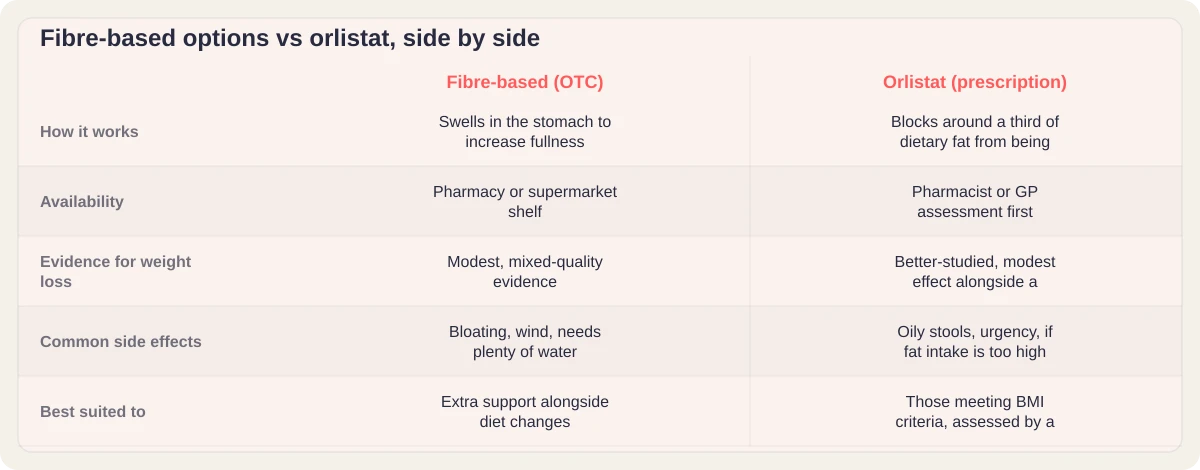
Neither option is automatically the better choice; it depends on your BMI, health history and how much support you need. A pharmacist can help you work out which, if either, is appropriate for you.
Are appetite suppressants safe?
Safety depends heavily on the product and on your own health. Fibre-based supplements are generally well tolerated when taken correctly, though bloating and wind are common early on. Orlistat's main side effects relate to undigested fat passing through the gut: oily or loose stools, wind with discharge, and urgency, especially if a meal is higher in fat than expected. These effects usually settle as you adjust your diet around the medicine.
Orlistat is not suitable during pregnancy or breastfeeding, for some people with malabsorption conditions, or alongside certain medicines such as ciclosporin or some blood-thinning tablets, which is why it is only supplied after a consultation rather than taken off a shelf without any check. Stronger prescription-only options carry their own specific warnings and unsuitable groups, which is exactly what a clinical assessment is there to screen for before anything is prescribed.
Be cautious of appetite suppressants bought from unregulated websites, particularly ones making bold claims that don't match the evidence. Products like this have, in the past, been found to contain undeclared or banned ingredients. Sticking to a UK pharmacy or a registered online clinic is the safest way to know what you are actually taking.
Getting appetite suppressant support safely
If you are considering an appetite suppressant, a pharmacist is a sensible first stop. They can talk through whether a fibre-based product is suitable, flag any interactions with medicines you already take, and explain what orlistat involves if your BMI and health history fit the criteria.
For stronger prescription-only options, you will need a full online or in-person consultation covering your weight history, health conditions and current medicines before anything is considered safe to prescribe. This isn't red tape for its own sake: it is how a clinician checks that a particular treatment is actually right for your situation, rather than simply available to anyone who asks.
Whichever route you take, it is worth going in with realistic expectations and a plan for the basics: what you are eating, how active you are day to day, and how you will track whether something is actually helping. An appetite suppressant works best as one part of that wider plan, not as a stand-alone answer, and a clinician can help you build that plan around whichever option, if any, is suitable for you.
Frequently asked questions
Do appetite suppressants really work for weight loss?
Some do, to a modest degree, when used alongside changes to diet. Orlistat has reasonable trial evidence showing a small additional weight loss on top of dietary changes; fibre-based pharmacy products have weaker, more mixed evidence. None of them work well as a stand-alone solution without changes to eating habits.
Are appetite suppressants safe to take long-term?
It depends on the product. Fibre-based supplements are generally considered safe for ongoing use if taken as directed with enough water. Orlistat and stronger prescription options are usually reviewed periodically by a clinician, who checks how you're responding and whether continued use still makes sense for you.
What is the strongest appetite suppressant available in the UK?
The strongest options are prescription-only and only available after a full clinical assessment confirms you meet specific BMI and health criteria. These are not something a pharmacy can supply without that assessment, and they are not suitable for everyone.
Can I get appetite suppressants without a prescription in the UK?
Fibre-based products and a lower-strength version of orlistat can be supplied by a pharmacist after a short consultation, without needing to see a GP first. Stronger prescription-only options always require a full clinical assessment before they can be supplied.
What are the main side effects of orlistat?
The most common side effects relate to fat passing through the gut undigested: oily or loose stools, increased wind, and a feeling of urgency, particularly after a higher-fat meal. These effects usually ease once your diet adjusts around the medicine.
Can appetite suppressants be combined with other weight-management treatment?
This should only be done under clinical guidance. A pharmacist or GP needs to know about every medicine and supplement you're taking, as combinations can affect how well each one works or increase the risk of side effects.