Can you get TRT on the NHS? Criteria, referrals, waiting times and private options
 Clinically reviewed by the My London Pharmacy clinical team
·12 November 2026
·7 min read
·Reviews on Trustpilot
Quick answer
The NHS can prescribe testosterone replacement therapy (TRT), but only once hypogonadism is confirmed with two low morning blood tests and a GP or endocrinology review. Many men face long waits. A private pathway uses the same blood criteria but moves faster, at your own cost, and still needs ongoing monitoring.
What the NHS needs to see before prescribing TRT
The NHS does not prescribe testosterone replacement therapy on symptoms alone. Tiredness, low mood, reduced interest in sex, fewer morning erections and loss of muscle bulk can all point towards low testosterone, but every one of them can also come from something else entirely. So the starting point is always a blood test, not a prescription.
To confirm hypogonadism (clinically low testosterone), NHS guidance generally calls for two separate morning blood samples, taken on different days, both showing a low total testosterone result. Morning samples matter because testosterone follows a daily rhythm and sits highest shortly after waking, so an afternoon or evening reading can look falsely low even in a man whose levels are perfectly normal first thing.
Your GP will usually also check for other explanations before treatment is even discussed: thyroid problems, poor sleep (including undiagnosed sleep apnoea), depression, excess alcohol, certain medicines (including some opioids and steroids), and a raised BMI can all lower testosterone or produce symptoms that mimic it. If these are not ruled out, a single low reading is not treated as proof of hypogonadism, and a man whose levels normalise once an underlying issue is addressed would not usually go on to be offered TRT.
The usual referral route: GP first, then a specialist
If your two morning samples are both low, your symptoms fit, and no other cause explains it, some GPs are confident enough to start treatment directly for straightforward cases. More often, especially where the cause is unclear, your bloods sit in a borderline range, or you are younger than the typical age for this to happen naturally, you will be referred to an endocrinologist, a specialist in hormone conditions.
The specialist reviews your history in more depth, repeats or extends the blood work (often including LH, FSH and prolactin to see whether the problem starts in the testes themselves or further up, in the pituitary gland that controls them), and may arrange an ultrasound or other scan in some cases to look for a structural cause. Only once hypogonadism is confirmed this way, and other causes have been excluded, does an NHS prescription for TRT usually follow.
This two-stage structure, GP then specialist, is also why the paperwork and waiting can feel slow even when your own symptoms feel urgent to you. Each stage exists to avoid treating the wrong problem.
Why the wait can run into months
Endocrinology waiting lists vary a great deal by area, and a routine referral for suspected low testosterone is rarely treated as clinically urgent in the way a suspected cancer or acute illness would be. It is common for men to wait several months between a GP referral and a first specialist appointment, with further time then needed for repeat bloods, additional tests and a follow-up review before treatment actually starts.
This is not the NHS being slow for no reason. Low testosterone has to be distinguished carefully from normal age-related decline, temporary dips caused by illness or stress, and other medical conditions, and getting that distinction wrong in either direction carries a cost: under-treating a man with a genuine, confirmed deficiency, or starting someone on long-term hormone treatment, with its own monitoring needs and side effects, that he did not actually need.
While you wait, your GP can still offer some support, reviewing lifestyle factors such as weight, sleep and alcohol that may be contributing, and keeping an eye on your symptoms in the meantime.
Who the NHS typically will not treat
The NHS pathway is built around confirmed hypogonadism, a genuine medical deficiency with an identifiable pattern on testing, not general interest in optimising testosterone levels that already sit within the normal range. A result at the low end of normal, without a clear pattern of symptoms and two confirmed low readings, usually will not meet the threshold for treatment.
Testosterone replacement is also not offered on the NHS for performance, muscle-building or anti-ageing purposes, and it is not an appropriate treatment for low mood or fatigue in a man whose testosterone level is actually normal. If weight, sleep or lifestyle factors are the main driver of a borderline result, the first step is usually addressing those directly rather than starting hormone treatment that would then need to continue indefinitely.
How a private pathway compares
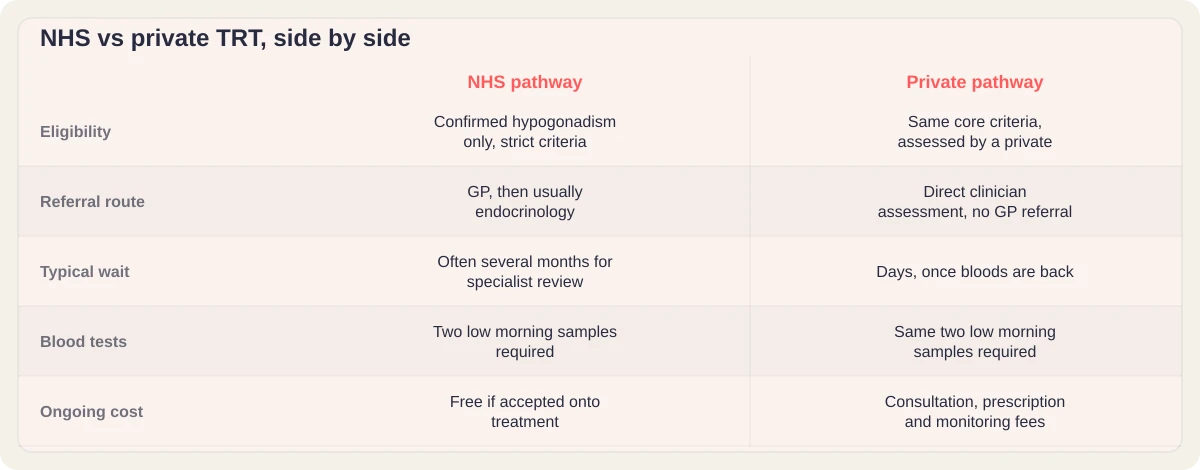
A private testosterone service is not a way around proper testing. A responsible one still relies on the same two low morning blood samples and a clinical history, reviewed by a qualified, GPhC or GMC-regulated prescriber, before anything is prescribed. What differs is speed and cost: a private assessment can usually move from bloods to a reviewed result within days rather than months, because it is not drawing on the same stretched endocrinology waiting lists.
That speed comes at a price. You pay for the consultation, the blood tests if they are not done elsewhere, the prescription itself, and the ongoing monitoring that TRT requires for as long as you stay on treatment. For some men, particularly those who have already waited a long time, whose symptoms are significantly affecting daily life, or whose NHS case has stalled in a referral queue, that trade-off is worth weighing up alongside the NHS route rather than instead of it.
The table below sets out how the two pathways generally compare.
Monitoring does not stop once treatment starts
Whichever route you take, starting TRT is not a one-off decision. Testosterone level, full blood count (particularly haematocrit, a measure of how concentrated your red blood cells are), and markers such as PSA in older men are usually rechecked a few months after starting, then at regular intervals after that. TRT can raise red blood cell levels and affect other markers, so these need watching for as long as treatment continues.
On the NHS, this monitoring is usually built into the same specialist follow-up pathway that confirmed your diagnosis in the first place, so appointments tend to be scheduled for you. Privately, it is your own responsibility to keep monitoring appointments up to date and to flag any new symptoms promptly, since missed reviews are one of the more common reasons private TRT goes wrong over time.
Deciding what to do next
If you suspect low testosterone, a sensible first step is a GP appointment and a morning blood test, whether or not you end up staying on the NHS pathway afterwards. That result, taken correctly at the right time of day, is useful evidence either way, and most private services will want to see it or repeat it before going any further.
From there, the choice between waiting for an NHS specialist review and starting a private assessment usually comes down to three practical questions: how much the wait matters to you given how your symptoms are affecting your life, what your budget allows for ongoing private consultations and monitoring, and how settled you are that your symptoms genuinely warrant hormone treatment rather than addressing another underlying cause first. A clinician can talk through where you stand on each of these before you commit to either path, and the two routes are not mutually exclusive if your circumstances change.
Frequently asked questions
Will the NHS treat low testosterone if I just feel tired and low?
Tiredness and low mood alone are not usually enough. The NHS looks for two separate low morning blood tests alongside your symptoms, and will usually check for other causes such as thyroid problems, poor sleep or depression before considering a diagnosis of hypogonadism.
How long does an NHS referral for TRT usually take?
It varies by area, but it is common for the wait between a GP referral and a specialist endocrinology appointment to run into several months, with further time needed for repeat blood tests and a follow-up review before treatment can start.
Can I get TRT privately if the NHS does not accept my case?
Yes, a private clinician can assess you using the same two low morning blood test standard. This does not lower the bar for diagnosis, it simply moves the assessment outside NHS waiting lists, at your own cost.
Does private TRT still require blood tests like the NHS?
Yes. A responsible private service will not prescribe testosterone without confirmed low readings from morning blood samples and a review of other possible causes, in the same way the NHS does.
What blood tests confirm low testosterone?
Two separate morning total testosterone samples, usually alongside LH, FSH and sometimes prolactin, to help work out whether the cause sits in the testes or further up in the pituitary gland.