
Heavy periods (menorrhagia): causes and treatment options
Quick answer
Menorrhagia means losing an unusually large amount of blood during your period, often with large clots or bleeding that soaks through protection quickly. Common causes include hormonal changes, fibroids and endometriosis, though often no single cause is found. Treatment ranges from anti-inflammatory tablets to hormonal options such as the IUS; a clinician can help you find what suits you.
What counts as a heavy period?
There's no single blood-loss figure that defines a heavy period in everyday terms. Instead, clinicians usually ask whether your bleeding is affecting your quality of life. Signs that a period is heavier than typical include:
- Needing to change a pad or tampon every one to two hours
- Using both a pad and a tampon together to cope with the flow
- Passing clots larger than a 50p coin
- Bleeding through to your clothes or bedding, including at night
- Periods lasting longer than seven days
- Having to plan your day around your bleeding, or avoiding activities because of it
Menorrhagia is the clinical term for this pattern of heavy menstrual bleeding. It's a common complaint, and in many cases there's an effective treatment once the likely cause has been considered.
Common causes of heavy periods
In roughly half of cases, no specific underlying condition is found, this is sometimes called dysfunctional uterine bleeding and relates to how the lining of the womb builds up and sheds each cycle, rather than to any disease process. Where a cause is identified, it often includes one of the following.
- Fibroids: non-cancerous growths in or around the womb that are a frequent cause of heavy bleeding, particularly in your 30s and 40s. Their size and position, rather than their presence alone, usually determine whether they cause symptoms
- Endometriosis and adenomyosis: conditions where womb-lining tissue grows in the wrong place or within the muscle wall of the womb, often causing pain alongside heavier bleeding, particularly around and during a period
- Polyps: small, usually benign growths in the womb lining that can cause irregular, heavy bleeding, including bleeding between periods
- Hormonal changes: including perimenopause, polycystic ovary syndrome, and thyroid problems. During perimenopause in particular, cycles can swing between unusually light and unusually heavy as hormone levels fluctuate
- A copper (non-hormonal) coil: can make periods heavier and more crampy for some people, especially in the first few months after it's fitted
- Blood-clotting conditions: less common, but worth ruling out if heavy bleeding has been lifelong, started suddenly, or runs alongside frequent bruising or nosebleeds
Having one of these conditions doesn't automatically mean you need investigation straight away. The starting point is usually your symptoms and how they're affecting you, with further tests added if something specific needs ruling out.
When heavy bleeding needs medical attention
It's worth arranging a consultation if heavy periods are affecting your day-to-day life, your sleep, or your ability to work, exercise or socialise as normal. You should also seek medical advice, usually from your GP in the first instance, if you notice any of the following:
- Symptoms of anaemia, such as persistent tiredness, breathlessness, dizziness or looking unusually pale
- Bleeding between periods, or after sex
- Any bleeding after the menopause
- Sudden, very heavy bleeding that soaks through protection within the hour
These patterns don't automatically mean something serious is wrong, but they're worth checking promptly rather than waiting them out.
Managing heavy periods day to day
Alongside any treatment, a few practical steps can make heavy periods easier to live with while you work out what's causing them and what helps:
- Track your cycle: noting how many days you bleed, how often you change protection, and when clots or flooding happen gives your clinician far more to work with than 'heavy' alone
- Consider your iron intake: red meat, dark leafy greens, pulses and fortified cereals all contribute iron. If you're told you're low in iron, a supplement may be suggested alongside dietary changes
- Plan for flooding: period underwear, higher-absorbency products, or doubling up protection on your heaviest days can reduce anxiety about leaks, particularly at work or overnight
- Pace heavy days: fatigue is common on the heaviest one or two days of a period; building in rest where you can, rather than pushing through, is reasonable rather than something to feel guilty about
These steps don't replace treatment where treatment is needed, but they can make a real difference to how manageable heavy periods feel while you're working out the right long-term plan.
Non-hormonal treatment options
If pregnancy isn't a factor and hormonal treatment isn't wanted or suitable, two tablet-based options are commonly used, usually taken only during the days of heaviest bleeding:
- Tranexamic acid helps blood clot more effectively at the site of bleeding, reducing the overall amount of blood lost. It doesn't affect hormones or fertility.
- Anti-inflammatory painkillers (NSAIDs) such as Mefenamic Acid 500mg can reduce both bleeding and period pain, and are often used alongside tranexamic acid.
Both are typically taken for a few days each cycle rather than continuously, which suits people who want a treatment they only use when needed.
Hormonal treatment options
Where non-hormonal options aren't enough, or contraception is also wanted, several hormonal treatments can reduce bleeding significantly:
- The hormonal IUS (intrauterine system) releases a small, steady dose of progestogen directly into the womb. It's often the most effective option, commonly reducing bleeding by up to 90% after a year of use, and it also provides contraception for several years.
- The combined contraceptive pill can make periods lighter, more regular and more predictable for many people.
- A short course of Norethisterone, a progestogen tablet, can be used to control an episode of heavy bleeding, though it isn't typically used as a long-term solution on its own.
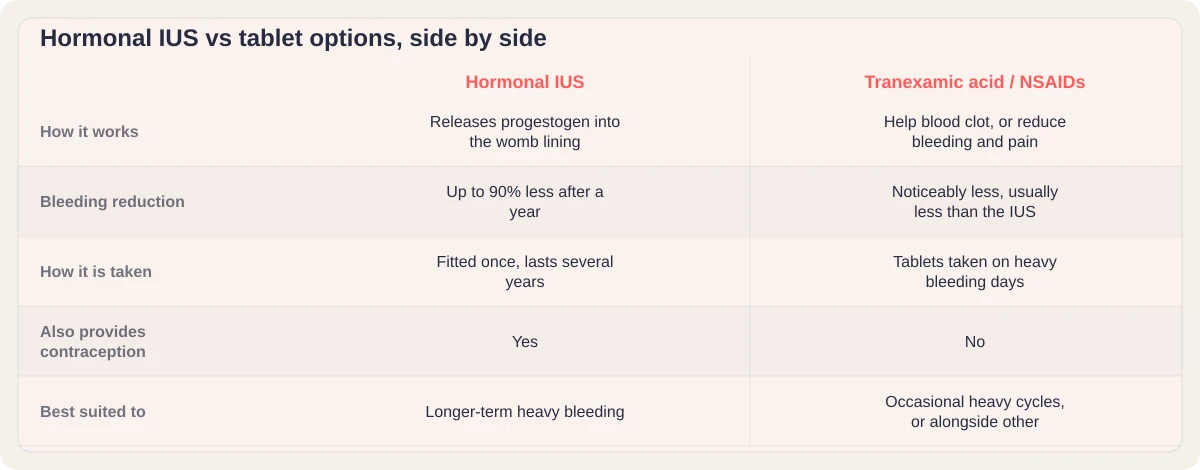
Which option makes sense depends on whether you also want contraception, whether you're trying to conceive, and how you feel about a fitted device versus a daily or short-course tablet. This is exactly the kind of decision a clinician will talk through with you rather than applying a single default answer. It's also worth knowing that none of these options are permanent commitments: the IUS can be removed at any point, and tablet-based options are simply stopped when they're no longer needed.
Getting a diagnosis
Many cases of heavy bleeding can be assessed and treated based on your history and symptoms alone, without further tests. Where more information is useful, a clinician may suggest:
- A blood test to check for iron deficiency anaemia, since heavy, ongoing blood loss can lower iron levels over time
- A thyroid function test, as an underactive or overactive thyroid can affect periods
- A pelvic examination
- A pelvic ultrasound scan, usually arranged if fibroids, polyps, or another structural cause is suspected
Not every person needs every test. The aim is to rule out a specific cause where one seems likely, then agree a treatment plan that fits your situation and preferences. If an initial treatment doesn't help enough, that's useful information too, and it usually just means moving on to the next appropriate option rather than starting again from scratch.
Frequently asked questions
How do I know if my periods are too heavy?
As a rough guide, periods are generally considered heavy if you're changing a pad or tampon every one to two hours, passing clots larger than a 50p coin, or regularly bleeding through to your clothes or bedding. If heavy bleeding is affecting your daily life, it's worth discussing with a clinician rather than just managing around it.
Can heavy periods cause anaemia?
Yes. Losing a significant amount of blood each cycle can gradually lower your iron levels, leading to iron deficiency anaemia. Common symptoms include persistent tiredness, breathlessness and pale skin. A simple blood test can check for this.
Is the hormonal IUS a good option for heavy periods?
For many people, yes. It's one of the most effective treatments available, often reducing bleeding by up to 90% after a year of use, while also providing contraception. It doesn't suit everyone, so it's best discussed as part of a consultation that considers your wider health and preferences.
Do I need a scan if I have heavy periods?
Not always. Many cases are assessed and treated based on your symptoms and history alone. A pelvic ultrasound scan may be arranged if fibroids, polyps or another structural cause is suspected.
Can heavy periods be a sign of something serious?
Most heavy periods have a benign cause, such as hormonal fluctuation or fibroids, and respond well to treatment. That said, new heavy bleeding after the menopause, or bleeding between periods or after sex, should always be checked promptly by a clinician.