
Overactive thyroid (hyperthyroidism): symptoms, causes and treatment
Quick answer
An overactive thyroid (hyperthyroidism) speeds up the body's processes, often causing a fast heartbeat, weight loss, anxiety and heat intolerance. It's confirmed with a blood test measuring thyroid hormone levels and is usually caused by Graves' disease. Treatment typically starts with a daily tablet called carbimazole, alongside monitoring from a clinician.
What an overactive thyroid is
The thyroid is a small, butterfly-shaped gland at the front of the neck. It produces hormones, mainly thyroxine (T4) and a smaller amount of triiodothyronine (T3), which control how quickly the body uses energy: essentially setting the pace for metabolism, heart rate and digestion. An overactive thyroid, medically called hyperthyroidism, happens when the gland produces too much of these hormones, so the body's processes speed up.
It's less common than an underactive thyroid, but it can affect anyone. It's around ten times more common in women than men, and typically develops between the ages of 20 and 40, though it can happen at any age. Because the symptoms can resemble stress, anxiety or simply being run down, it's sometimes missed for a while before a blood test confirms what's going on.
The medical term for an overactive thyroid is thyrotoxicosis, which simply describes the body being exposed to more thyroid hormone than it needs. Whatever the underlying cause, the effect on how someone feels day to day is broadly similar: a body that's running faster than it should, with knock-on effects for the heart, nervous system, digestion and periods.
Common symptoms of an overactive thyroid
Because an overactive thyroid speeds up the body's processes, the symptoms tend to be the opposite of an underactive thyroid: instead of everything slowing down, it runs faster than usual. Symptoms usually build up gradually, though some people notice a cluster of changes within a few weeks.
- A fast, irregular or pounding heartbeat (palpitations)
- Feeling anxious, irritable or unusually on edge
- Trembling hands or fingers
- Unexplained weight loss, despite a normal or increased appetite
- Feeling the heat more than people around you, and sweating more
- Difficulty sleeping and persistent tiredness
- Muscle weakness, particularly in the upper arms and thighs
- A swelling in the neck (goitre), or eyes that feel gritty, dry or more prominent
- Looser or more frequent bowel movements
- Lighter or less frequent periods
Not everyone has all of these, and in older people the symptoms can be more subtle, sometimes appearing mainly as tiredness or an irregular heartbeat rather than the fuller picture. A single symptom on its own rarely means much, but several together, especially if they last more than a few weeks, are a reasonable reason to get tested.

What causes an overactive thyroid
Most cases, around 4 in every 5, are caused by Graves' disease: an autoimmune condition where the immune system produces antibodies that stimulate the thyroid into making too much hormone. The exact cause of Graves' disease isn't fully understood, but it tends to run in families, is more likely in smokers, and mostly affects younger or middle-aged women. A minority of people with Graves' disease also develop eye changes, sometimes called thyroid eye disease, which can cause dryness, grittiness or more prominent-looking eyes and is usually managed alongside the thyroid itself.
Other, less common causes include thyroid nodules that produce hormone independently of normal control (sometimes called a toxic nodule or toxic multinodular goitre), inflammation of the thyroid (thyroiditis), which can follow a viral illness or pregnancy, and, rarely, taking more thyroid hormone replacement medicine than needed. Identifying the specific cause matters, since it affects which treatment is likely to work best: a toxic nodule, for example, tends to respond differently to treatment than Graves' disease does.
How it's diagnosed
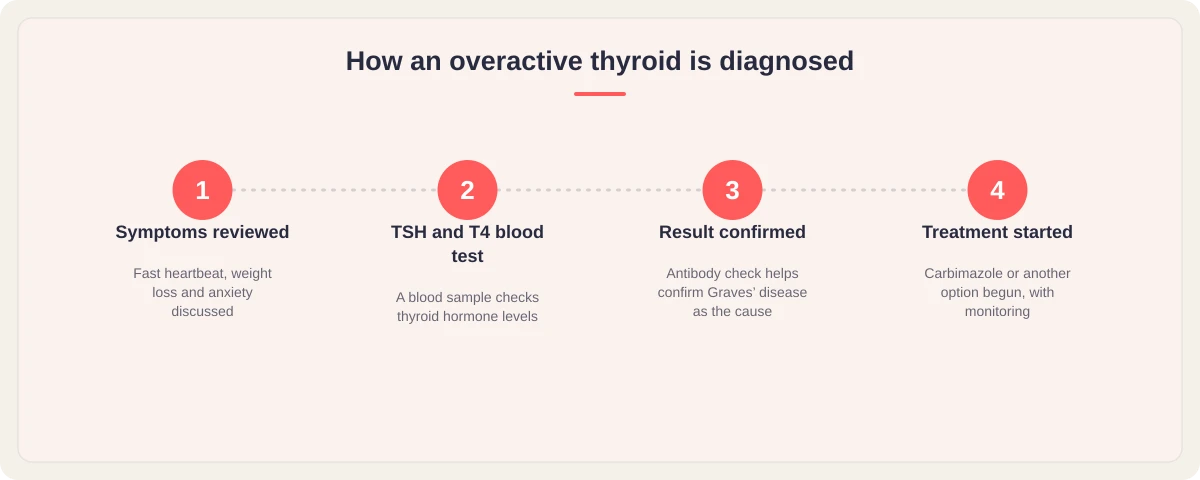
An overactive thyroid is confirmed with a blood test, not by symptoms alone, since many of the symptoms overlap with anxiety, stress or other conditions. The test measures thyroid-stimulating hormone (TSH), which is usually low, alongside free T4 and sometimes free T3, which are usually raised.
If the blood test confirms an overactive thyroid, a clinician will often check for thyroid antibodies to see whether Graves' disease is the likely cause, examine the neck for any swelling, and request an ultrasound or specialist scan if a nodule is suspected. A repeat test is sometimes used to confirm a borderline result before starting treatment.
Treatment options
Treatment depends on the cause, how severe the symptoms are, and personal factors such as whether pregnancy is being planned. A beta-blocker is often used in the short term to ease symptoms like a fast heartbeat and trembling while the underlying cause is addressed, though it doesn't treat the thyroid itself.
The most commonly used longer-term treatment in the UK is carbimazole, a tablet that reduces how much hormone the thyroid produces. Most people start to feel better within one to three weeks, though it can take one to two months to work fully. For Graves' disease, a typical course runs for twelve to eighteen months; around half of people stay well afterwards, while the other half may need further treatment if the condition returns.
Other options include radioactive iodine treatment, which gradually reduces the size and activity of the thyroid over several weeks, and surgery to remove part or all of the gland, usually reserved for a large goitre, suspected nodules, or when other treatments aren't suitable. Each option has a different balance of convenience, side effects and long-term outlook, which is why the choice is made with a specialist rather than from a standard protocol.
Living with an overactive thyroid
Once treatment starts, regular blood tests check that hormone levels are settling into a normal range, and the dose is adjusted if needed. Carbimazole is generally well tolerated, though a rash is the most common side effect and usually settles with an antihistamine. A rare but serious side effect is a sudden drop in white blood cells, so a sore throat, mouth ulcers or fever while taking it should be reported promptly rather than waited out.
If you smoke, stopping can help, since smoking is linked to a higher risk of Graves' disease and can also affect eye symptoms if they develop. If you become pregnant or are planning to, let a clinician know as soon as possible: some antithyroid medicines are adjusted or changed in pregnancy, and thyroid levels are monitored more closely throughout.
Day to day, it helps to pace yourself while symptoms settle: a racing heart and poor sleep can leave energy levels low even though the underlying problem is the thyroid running too fast, not too slow. Caffeine and alcohol can make palpitations and anxiety feel more noticeable for some people, so it's worth noticing whether cutting back makes a difference while treatment takes effect. Any new or worsening symptoms, particularly chest pain, a very fast heartbeat, or a high temperature with confusion, should be treated as urgent rather than put down to the condition itself.
Getting tested
If you recognise several of the symptoms above, particularly a persistently fast heartbeat, unexplained weight loss or feeling unusually anxious and hot, a thyroid blood test is a reasonable next step. This can be arranged through your GP, or privately if you'd prefer a faster turnaround or want to test thyroid function alongside other hormone markers, such as those linked to fatigue or mood.
A private hormone test gives you a clear result to bring to a clinician, along with guidance on what it means and what to do next. If a test does point to an overactive thyroid, ongoing treatment and monitoring is arranged through your GP or a specialist, so the result leads straight into the next step rather than sitting unexplained.
Frequently asked questions
What are the first signs of an overactive thyroid?
A fast or irregular heartbeat, feeling anxious or on edge, trembling hands and unexplained weight loss are among the earliest and most common signs. They tend to build up over a few weeks, so it's often the combination that prompts a test.
Is an overactive thyroid dangerous if left untreated?
Left untreated for a long time, it can put strain on the heart and, in rare cases, lead to a serious complication called a thyroid storm. This is uncommon, and most people who get treatment have their symptoms well controlled.
How long does carbimazole take to work?
Most people start to feel better within one to three weeks, though it can take one to two months for carbimazole to work fully. Blood tests are used to check progress and adjust the dose.
Can an overactive thyroid go away on its own?
Some causes, such as thyroiditis after a viral illness or pregnancy, can settle on their own. Graves' disease usually needs treatment, though around half of people stay well after a full course of carbimazole.
What's the difference between an overactive and underactive thyroid?
An overactive thyroid produces too much hormone and speeds the body up, causing symptoms like a fast heartbeat and weight loss. An underactive thyroid produces too little and slows the body down, causing tiredness and weight gain.