
How to reduce bloating: causes and what actually helps
 Reviewed by the My London Pharmacy clinical team
·2 November 2026
·7 min read
·Reviews on Trustpilot
Quick answer
Bloating is usually caused by trapped wind, a food or drink that does not agree with you, or slower gut movement, and it tends to settle with small diet and lifestyle changes. See a GP if it is persistent, painful, or comes with weight loss or a change in your bowel habit.
What is bloating and why does it happen?
Bloating is the feeling of fullness, tightness or swelling in the tummy, and it is one of the most common digestive complaints seen in general practice and in pharmacy. It happens when gas builds up in the gut, when the muscles of the bowel wall move more slowly than usual, or when the gut becomes temporarily more sensitive to its normal contents, so that a completely ordinary amount of gas or food feels uncomfortable.
Many people notice their tummy visibly looks larger by the end of the day, and this is often just the natural build-up of gas and food moving through the digestive system since breakfast, rather than a sign that anything is wrong. The tummy tends to be at its flattest first thing in the morning and gradually distends over the course of the day as meals are digested.
For most people, bloating is linked to something they ate or drank, how quickly they ate it, or a few days of unsettled bowel habit, and it clears on its own within a day or two. It becomes worth paying closer attention to when it is frequent, painful, or part of a wider pattern of symptoms, which later sections cover in more detail.
Common causes of bloating
Several everyday things can trigger bloating, often in combination rather than alone. Swallowing air while eating quickly, talking while chewing, drinking through a straw, or fizzy drinks all add extra gas to the gut, which has to pass through before it settles.
Certain foods are also well known to produce more gas during digestion, particularly beans, lentils, cabbage, onions and other foods high in fermentable carbohydrates. These foods reach the large bowel only partly digested, where gut bacteria ferment them and release gas as a by-product; this is a normal digestive process, not a sign that anything is wrong, but it does explain why some meals leave you feeling fuller and tighter than others.
Constipation is another common cause: when stool sits in the bowel for longer, more gas is produced by the bacteria breaking it down, and the bowel itself stretches, both of which add to the feeling of fullness. Chewing gum and artificial sweeteners found in some sugar-free foods and drinks can also contribute, since some sweeteners draw water into the bowel and ferment in a similar way to high-fibre foods.
Hormonal changes around the menstrual cycle, eating a larger meal than usual, and periods of stress can all make the gut more sensitive, so the same amount of gas or food feels more uncomfortable than it otherwise would. Some medicines, including certain painkillers and iron supplements, can also slow the gut as a side effect; if bloating started around the same time as a new medicine, it is worth mentioning this to a pharmacist.
Why you might feel bloated after eating specifically
Bloating that turns up reliably after meals, rather than at random points in the day, usually points to something about the meal itself or how it was eaten. Large portions, rich or fatty food, and eating quickly without much chewing all slow digestion and increase gas production.
Some people notice a pattern with specific foods, such as dairy, wheat, or particular vegetables, which can suggest a mild intolerance rather than a serious problem. Keeping a short diary of meals and symptoms for one to two weeks is a simple way to spot a pattern before assuming the worst or cutting out whole food groups unnecessarily.
Eating late at night, lying down soon after a meal, or combining a large meal with alcohol can also make after-meal bloating more noticeable, since digestion naturally slows when the body is winding down for sleep. Carbonated drinks taken alongside a meal add further gas on top of whatever the food itself produces, which is why a meal that is usually fine can feel much more uncomfortable when it is washed down with a fizzy drink.
Diet and lifestyle changes that actually help
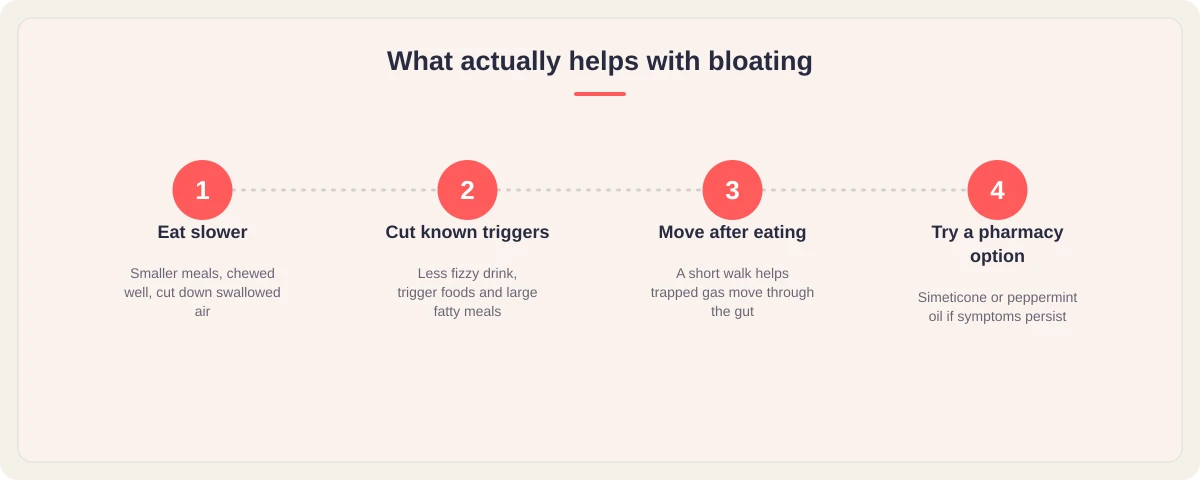
Small, practical changes make the biggest difference for most people. Eating more slowly, chewing thoroughly, and having smaller, more regular meals instead of one or two large ones all reduce the amount of air swallowed and ease the load on digestion at any one time.
Cutting back on fizzy drinks, limiting foods known to produce more gas, and introducing more fibre gradually rather than all at once can help, since a sudden jump in fibre intake can itself cause bloating for a week or two before the gut adjusts. Regular movement, even a short walk after eating, helps gas move through the gut more easily and is one of the most consistently useful everyday remedies.
Staying well hydrated supports regular bowel movement and softer stool, which lowers the amount of gas produced during digestion, and reducing stress where possible can help too, since the gut and the nervous system are closely linked.
Over-the-counter options that can help
A pharmacist can suggest an over-the-counter option suited to the likely cause once more serious causes have been ruled out. Simeticone-based remedies help break down trapped gas bubbles and are commonly used for straightforward wind and bloating. Peppermint oil capsules can ease cramping and bloating linked to a sensitive gut by relaxing the muscles of the bowel wall.
Where bloating comes with cramping pain, an antispasmodic such as Alverine Citrate can help by relaxing bowel muscle spasm, and is often used alongside the diet and lifestyle changes above rather than instead of them. A short-term laxative may be appropriate if constipation is the main driver, though this should be used as directed and not relied on long-term without a pharmacist's advice.
If symptoms do not improve after trying one of these for a week or two, or if they keep coming back, it is worth discussing it with a pharmacist or GP rather than continuing to self-treat indefinitely.
A pharmacist will also ask about other medicines you take and any existing health conditions before recommending anything, since some over-the-counter options are not suitable during pregnancy or alongside certain other treatments. This is also a useful moment to raise any other digestive symptoms you have noticed, even if they seem unrelated, as the full picture helps guide the right choice.
When bloating needs medical attention
Most bloating is harmless and short-lived, but a smaller number of cases need a proper assessment. The checklist below sets out the signs that mean bloating should be checked by a GP rather than managed at home.
- Bloating that is persistent or gradually getting worse over several weeks, rather than coming and going
- Bloating with unexplained weight loss, or a loss of appetite
- A change in bowel habit, such as looser or harder stool, that lasts more than a few weeks
- Blood in your stool, or black, tarry-looking stool
- Pain that is severe, constant, or wakes you at night
- New bloating in anyone aged 50 or over, particularly alongside any of the above
None of these signs on their own means something serious is happening, but they are the pattern a GP will want to assess properly, usually with a simple examination and a small number of blood tests to begin with.
Could it be IBS?
Irritable bowel syndrome (IBS) is one of the most common causes of recurring bloating, often alongside cramping, a change in bowel habit, and symptoms that ease after passing wind or a bowel movement. Bloating from IBS tends to build through the day and is frequently linked to specific foods or stress.
A GP can usually diagnose IBS from the pattern of symptoms and a small number of simple tests to rule out other causes. Managing it typically combines the diet and lifestyle approach already covered with, for some people, targeted medicines for symptom flare-ups, agreed with a clinician rather than self-selected long-term.
Frequently asked questions
Why am I so bloated all the time?
Frequent bloating is usually down to diet, eating habits, constipation, or a sensitive gut such as IBS. If it happens most days, keeping a short food and symptom diary and seeing a pharmacist or GP is more useful than guessing at a single cause.
What foods cause bloating?
Beans, lentils, cabbage, onions and other foods high in fermentable carbohydrates are common triggers, along with fizzy drinks and large, fatty meals. Triggers vary from person to person, so a short diary is the most reliable way to identify yours.
Does drinking water help with bloating?
Yes, staying well hydrated supports regular bowel movement and softer stool, which can reduce the gas produced during digestion. It will not resolve bloating caused by a specific food intolerance or an underlying condition on its own.
How long does normal bloating usually last?
Bloating linked to a meal or a few days of unsettled digestion usually eases within a day or two. Bloating that lasts longer than two to three weeks, or keeps returning, is worth discussing with a pharmacist or GP.
Can stress cause bloating?
Yes, the gut and the nervous system are closely linked, so stress and anxiety can make the gut more sensitive and slow digestion, making normal amounts of gas feel more uncomfortable.
When is bloating serious enough to see a GP?
See a GP if bloating is persistent or painful, comes with unexplained weight loss, a change in bowel habit lasting more than a few weeks, blood in your stool, or if you are over 50 and it is a new symptom.