
Senna tablets: how they work, how long they take and safe use
Quick answer
Senna tablets are a stimulant laxative that usually produce a bowel movement within 6 to 12 hours, often taken at bedtime for a morning result. They are meant for short-term, occasional use; a pharmacist can advise if you need them often or if constipation does not improve.
What is senna and how does it work?
Senna is a plant-derived stimulant laxative, sold over the counter as tablets (and sometimes as a syrup or granules), used for the short-term relief of occasional constipation. It comes from the leaves and pods of the Senna plant and has been used as a laxative for a very long time, though the tablet form sold in UK pharmacies is a standardised, measured dose rather than a herbal remedy in the traditional sense.
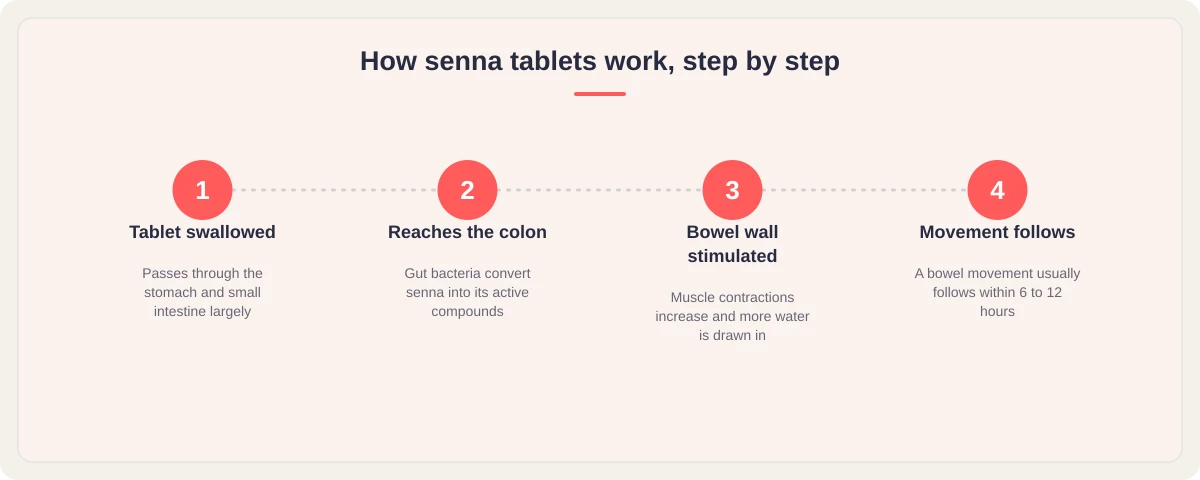
Unlike bulk-forming laxatives, senna does not work by adding fibre or bulk to stool. Instead, it passes through the stomach and small intestine largely unchanged, then reaches the large bowel (colon), where gut bacteria convert it into active compounds. These compounds act directly on the lining of the bowel wall, increasing the muscle contractions that push stool along (known as peristalsis) and drawing extra water into the bowel. The combined effect, more movement plus softer stool, is what brings on a bowel motion.
How long does senna take to work?
Senna tablets typically start working within 6 to 12 hours, which is why most packets recommend taking them at bedtime, so the effect follows the next morning rather than overnight. This is noticeably slower than some other laxatives: osmotic laxatives can act within a few hours, while bulk-forming laxatives like ispaghula husk may take two to three days of regular use to have an effect.
The exact timing varies from person to person, depending on things like how much you have eaten, how hydrated you are, and how your individual gut responds. If nothing has happened after taking the recommended dose overnight, it is best not to take a second dose on top without checking with a pharmacist first, rather than assuming more will simply work faster.
A few things can make senna act more slowly than expected: taking it on an empty stomach after a long gap without food, being significantly dehydrated, or having very slow bowel transit from another cause. If you have tried senna at the stated dose for two or three nights running with little or no effect, that is a reasonable point to stop and check with a pharmacist rather than increasing the dose yourself, since the issue may need a different approach rather than simply more of the same laxative.
How to take senna tablets safely
Always follow the dose on the packet, or the dose a pharmacist recommends, and start with the lowest dose that works for you. Senna tablets are usually swallowed whole with water, typically in the evening. They can be taken with or without food, though taking them with a full glass of water helps the bowel have enough fluid to work with.
A few general points for safe use: drink enough fluids through the day, since senna relies partly on drawing water into the bowel; do not crush or chew the tablets unless the packet says this is fine; and avoid combining senna with other laxatives at the same time unless a pharmacist or GP has suggested this, since doubling up increases the risk of cramping, dehydration and an imbalance of salts in the blood.
It also helps to pair senna with simple lifestyle steps rather than relying on it alone: staying active where you can, eating regular meals that include fibre from vegetables, fruit, and wholegrains, and not ignoring the urge to go when it arises. These steps will not replace senna if you need it for a specific episode of constipation, but they often reduce how often you need a laxative at all, and they support any laxative you do take.
Who should avoid senna, or ask a pharmacist first
Senna is not suitable for everyone. You should check with a pharmacist or GP before taking it if you have a blockage or suspected blockage in your bowel, severe abdominal pain of unknown cause, inflammatory bowel disease such as Crohn's disease or ulcerative colitis during a flare-up, or if you are dehydrated.
It is generally not recommended for children under 12 without specific advice from a pharmacist or GP, since dosing and underlying causes of constipation need checking first. If you are pregnant or breastfeeding, senna is sometimes considered appropriate for short-term, occasional use because very little of it is absorbed into the bloodstream, but this should still be confirmed with a pharmacist, midwife or GP rather than assumed, particularly in the first instance.
Senna side effects: what to expect
The most common side effects of senna are abdominal cramps, bloating and wind, particularly if the dose is higher than you need. These tend to settle as your bowel adjusts or once the dose is reduced. Diarrhoea can also occur, especially if the dose is too high for you.
Less common but more serious effects can follow from using senna too often or for too long: the bowel can become less responsive to its own natural signals over time (sometimes called laxative dependence), and prolonged use can disturb the body's balance of salts, particularly potassium, which can in turn cause muscle weakness or an irregular heartbeat. This is one of the main reasons senna and other stimulant laxatives are intended for short-term or occasional use rather than an ongoing daily routine.
Some people also notice their urine turns a darker, reddish-brown colour after taking senna; this is a known, harmless effect of the way the body processes the active compounds, and it resolves once you stop taking it. It is worth knowing about in advance so that it does not cause unnecessary worry.
Can you take senna every day?
Senna is designed for short-term or occasional use, generally no more than a week at a time, unless a pharmacist or GP has advised otherwise for your particular situation. If you find you need a laxative most days to have a comfortable bowel movement, that is a sign worth discussing with a pharmacist rather than continuing to self-manage with senna alone.
Persistent constipation can have an underlying cause, such as diet, fluid intake, certain medicines, an underactive thyroid, or irritable bowel syndrome (IBS), and it is usually better managed by identifying and addressing that cause alongside any short-term laxative use, rather than relying on senna long term.
When to see a pharmacist or GP
Speak to a pharmacist or GP if your constipation lasts longer than a week despite using a laxative as directed, if you notice blood in your stool or black, tarry stools, if constipation alternates with episodes of diarrhoea, or if you have unexplained weight loss alongside a change in bowel habit.
You should also get advice if you are regularly needing laxatives to have a bowel movement, if senna causes severe cramping or does not help at all, or if constipation develops suddenly with no clear reason, particularly if you are over 50 or have a family history of bowel conditions. A pharmacist can help work out whether senna is still the right option for you, suggest an alternative, or refer you on if further investigation is needed.
Frequently asked questions
How long does senna take to work?
Most people notice an effect within 6 to 12 hours, which is why senna is usually taken at bedtime for a result the next morning. Timing can vary depending on diet, hydration and individual response.
Can you take senna every day?
Senna is intended for short-term or occasional use, generally no more than about a week at a time. Needing a laxative most days is worth discussing with a pharmacist, since ongoing use can affect how the bowel responds naturally over time.
What are the side effects of senna tablets?
The most common side effects are cramping, bloating and wind, especially at higher doses. Diarrhoea can also occur. Prolonged or excessive use can disturb the body's salt balance and reduce the bowel's natural responsiveness, so it is best kept to short-term use.
Can you take senna during pregnancy or while breastfeeding?
Senna is sometimes used for short-term, occasional constipation in pregnancy or while breastfeeding because very little is absorbed into the bloodstream, but this should be confirmed with a pharmacist, midwife or GP first rather than assumed.
Is senna suitable for children?
Senna tablets are generally not recommended for children under 12 without specific advice from a pharmacist or GP, since the cause of constipation and correct dosing need to be checked first.
What is the difference between senna and bulk-forming laxatives like ispaghula?
Senna is a stimulant laxative: it acts on the bowel wall to increase contractions and usually works within hours. Bulk-forming laxatives add fibre and bulk to stool and tend to take two to three days of regular use to have an effect; they are often considered a gentler, longer-term option for ongoing bowel regularity.