
Constipation remedies: what works and when to see a pharmacist
 Reviewed by the My London Pharmacy clinical team
·3 November 2026
·6 min read
·Reviews on Trustpilot
Quick answer
Start with more fibre, fluids and movement. If that is not enough after a few days, a bulk-forming or osmotic laxative usually helps; a stimulant laxative like senna gives a faster, short-term effect. See a pharmacist if symptoms last more than a week or you notice blood, severe pain or unexplained weight loss.
What counts as constipation
Constipation means passing stools less often than is usual for you, typically fewer than three times a week, or finding stools hard, lumpy and difficult or painful to pass. Everyone's normal pattern is different: some people go once a day, others every two or three days, so the change from your own baseline matters more than hitting a particular number.
Other common signs include straining, a feeling of not having fully emptied your bowel, bloating, and tummy discomfort that often eases once you go. Occasional constipation is extremely common and usually settles with simple changes at home, but it can also follow a change in diet, reduced activity, certain medicines, pregnancy, or travel, so thinking about what might have changed recently can point you towards a cause.
Common causes of constipation
Constipation usually has a fairly ordinary explanation rather than a serious one. Common triggers include a recent change in diet, not drinking enough fluids, a change in routine such as travel or illness that reduces how much you move around, and simply ignoring the urge to go because it is not convenient. Stress and anxiety can also slow the gut down for some people.
Pregnancy commonly causes constipation, partly due to hormonal changes and partly because the growing womb puts pressure on the bowel. Certain long-term conditions, such as an underactive thyroid, diabetes, or some neurological conditions, can also make constipation more likely, as can getting older, since the gut tends to move things along more slowly with age. A number of medicines list constipation as a known side effect too, which is covered in more detail further down this guide.

What to try first, before reaching for a laxative
For most people, a few simple changes are enough to get things moving again within a few days. Start with these before considering a laxative:
- Fluids: aim for around 6 to 8 glasses of water a day; dehydration is one of the most common and easily fixed causes of hard stools.
- Fibre: build up gradually with wholegrain bread and cereals, fruit, vegetables, and pulses, increasing slowly over a week or two rather than all at once, since a sudden jump in fibre can cause more bloating and wind.
- Movement: even a daily walk helps stimulate the bowel; long periods of sitting still, for example during illness or travel, are a common trigger.
- Routine: try to make time to go when you feel the urge rather than holding on, and a footstool to raise your knees above hip height can make the position easier for your bowel.
These changes work for many people within a few days, especially when the cause is diet, fluid intake or reduced activity rather than something else. They are also the first thing a pharmacist will usually ask about before suggesting anything else, so it is worth being able to say what you have already tried.
If diet and lifestyle changes are not enough: types of laxatives
When simple changes have not made enough difference after a few days, an over-the-counter laxative from a pharmacy can help. Different types work in different ways, and pharmacists usually suggest trying them in a particular sequence.
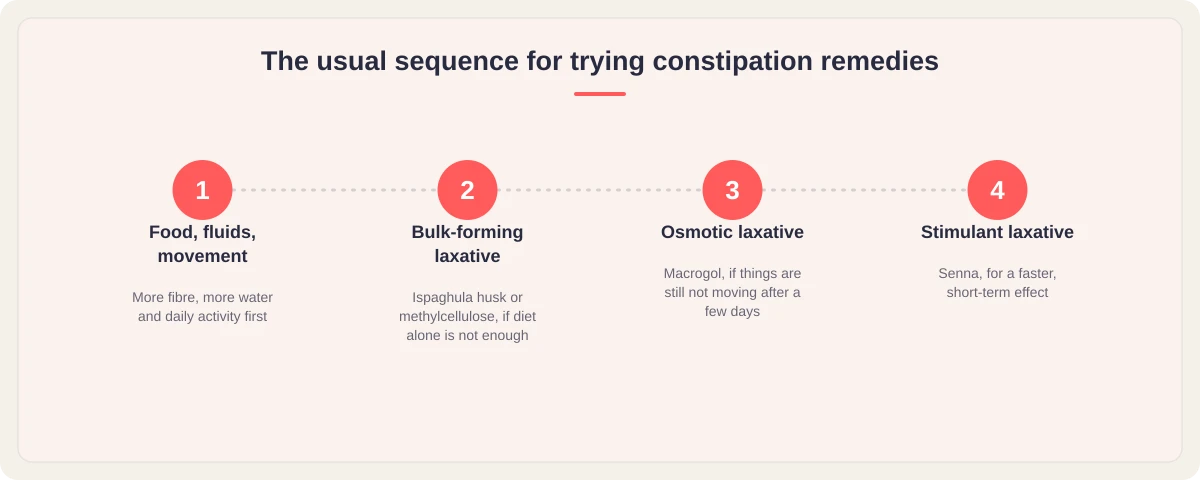
Bulk-forming laxatives (such as ispaghula husk or methylcellulose) work closest to how fibre works naturally: they absorb water in the gut and add bulk to stool, making it softer and easier to pass. They need to be taken with plenty of water and can take two to three days to have an effect, so they suit ongoing, gentle support rather than quick relief.
Osmotic laxatives (such as macrogol, often sold as Movicol or Laxido) draw water into the bowel to soften stool and make it easier to pass. They usually work within one to two days and are commonly recommended as a first-line option by pharmacists and GPs for everyday constipation.
Stimulant laxatives (such as senna or bisacodyl) act directly on the bowel wall to increase muscle contractions, giving a faster effect, often within 6 to 12 hours. Because they work more forcefully, they are usually recommended short-term rather than as an everyday solution; our guide to how senna tablets work covers this in more detail.
Stool softeners (such as docusate sodium) make stool easier to pass by helping water mix into it, and are sometimes used alongside another laxative rather than on their own.
Which laxative is right for you
A pharmacist can usually recommend the most suitable option in a short conversation, taking into account how long you have had symptoms, what you have already tried, and anything else going on with your health. As a general guide, an osmotic laxative such as macrogol is often tried first for everyday constipation, with a stimulant laxative such as senna reserved for when a faster effect is needed, or added for a short period if an osmotic laxative alone is not quite enough.
Some groups need extra care when choosing a laxative, including people who are pregnant, those with certain bowel conditions, and people taking other regular medicines, since some laxatives can affect how well other tablets are absorbed if taken too close together. This is exactly the kind of question a pharmacist is well placed to answer, usually without needing an appointment.
When to see a pharmacist, and when to get checked by a GP
It is worth speaking to a pharmacist if constipation has lasted more than a week despite trying the steps above, if it keeps coming back, or if you are not sure which laxative suits your situation. A pharmacist can also advise if you are already taking other medicines, since some, including certain painkillers, iron supplements and antidepressants, can contribute to constipation.
See a GP, or seek same-day medical advice, if you notice any of the following alongside constipation: blood in your stool or on toilet paper, unexplained weight loss, persistent tummy pain that is not relieved by passing stool or wind, a sudden change in bowel habit that lasts more than a few weeks (especially over the age of 50), or if you are completely unable to pass stool or wind along with severe bloating and vomiting, which needs urgent assessment. These are not usually signs of simple constipation and deserve a proper check rather than another laxative.
Preventing constipation coming back
Once things are moving again, keeping up the basics, regular fluids, a steady fibre intake, and daily movement, is usually enough to stop constipation becoming a repeated problem. If you know a particular trigger affects you, such as travel, a change in routine, or a medicine you take regularly, planning ahead with extra fluids and fibre around that time can help prevent it rather than treating it after it starts.
If you find you need a laxative regularly, rather than now and then, it is worth mentioning this to a pharmacist or GP so the underlying cause can be looked at properly, rather than relying on laxatives long-term without knowing why they are needed.
Frequently asked questions
How quickly do constipation remedies work?
It depends on the type. Bulk-forming laxatives usually take two to three days, osmotic laxatives such as macrogol tend to work within one to two days, and stimulant laxatives such as senna often work within 6 to 12 hours. Simple changes like extra fluids and fibre can also help within a few days for milder cases.
Can I take a laxative every day?
Short courses are generally fine for occasional constipation, but regular, ongoing use is not usually recommended without advice, since the right approach depends on the cause. If you find you need a laxative most weeks, speak to a pharmacist or GP so this can be looked into properly.
What is the best natural remedy for constipation?
For many people, more fluids, more fibre from food such as wholegrains, fruit and vegetables, and regular movement are enough on their own. These are usually tried first, before an over-the-counter laxative, and can also help prevent constipation coming back.
Can certain medicines cause constipation?
Yes. Codeine and other opioid painkillers, iron supplements, some antidepressants and a number of other regular medicines can contribute to constipation. If you have recently started a new medicine and noticed a change in your bowel habit, a pharmacist can advise whether this is likely to be the cause.
Is it normal not to go every day?
Yes, for many people it is. A normal bowel pattern varies from person to person, anywhere from three times a day to three times a week can be typical. What usually matters more is a change from your own normal pattern, rather than comparing to a fixed number.
When should I worry about constipation?
See a GP if constipation lasts more than a week despite trying the usual remedies, if you notice blood in your stool, unexplained weight loss, persistent tummy pain, or a new change in bowel habit that lasts several weeks, particularly if you are over 50. These need a proper check rather than another laxative.