
Magnesium deficiency: symptoms, causes and when to get tested
Quick answer
True magnesium deficiency is uncommon in otherwise healthy people, but certain medicines, digestive conditions and heavy alcohol use can lower levels. Symptoms are often non-specific, including tiredness, muscle cramps and nausea. A blood test confirms it, and treatment ranges from dietary changes and oral supplements to hospital-based treatment in severe cases.
What is magnesium and why does the body need it?
Magnesium is a mineral involved in several hundred processes in the body, including muscle and nerve function, keeping a steady heart rhythm, supporting bone strength, and helping convert food into energy. Most of the body's magnesium is stored in bone and soft tissue, with only a small amount circulating in the blood at any time.
The kidneys are good at holding on to magnesium, reabsorbing it rather than letting it pass out in urine when levels are running low. Because of this, a true magnesium deficiency, known medically as hypomagnesaemia, is relatively uncommon in people who are otherwise healthy and eating a varied diet. When low levels are found, there is often an underlying reason, such as a digestive condition, a particular medicine, or another factor increasing losses or reducing absorption.
What causes magnesium deficiency?
Low magnesium can come from not getting enough in the diet, from the gut struggling to absorb it properly, or from losing too much through urine or the digestive system. Common contributors include:
- A diet low in magnesium-rich foods, particularly alongside a generally poor or restricted diet
- Digestive conditions that affect absorption, such as coeliac disease or inflammatory bowel disease, or previous bowel surgery
- Chronic or severe diarrhoea, which increases how much magnesium is lost from the gut
- Heavy or long-term alcohol use
- Poorly controlled diabetes, which can increase magnesium loss in urine
- Certain medicines, including long-term proton pump inhibitors (used for acid reflux), some diuretics (water tablets), particular antibiotics, and some cancer treatments
Often more than one of these factors is present at once, which is why a clinician will usually ask about your diet, medicines and any digestive symptoms when working out what might be driving a low result, rather than assuming diet alone is to blame.
It is worth noting that claims circulating online about very high proportions of the population being magnesium deficient generally come from supplement sellers and wellness sites rather than NHS or NICE guidance, and are not well established. True deficiency confirmed on a blood test is uncommon in people without one of the risk factors above.

Common symptoms to look out for
Mild magnesium deficiency often causes no symptoms at all and may only be picked up on a blood test done for another reason. When symptoms do appear, they tend to be non-specific and can overlap with many other common conditions, which is part of why a blood test is needed to confirm the cause rather than relying on symptoms alone.
Reported symptoms include persistent tiredness, loss of appetite, mild nausea, muscle cramps or twitches, and numbness or tingling, often in the hands or feet. Some people also notice a general low mood or difficulty concentrating, though these are even less specific and have many other possible explanations.
If levels fall further or remain low for longer, more noticeable effects such as muscle weakness or an irregular heartbeat can develop. Because magnesium plays a direct role in keeping the heart's electrical activity stable, a persistently low level is taken seriously by clinicians even when day-to-day symptoms seem mild, which is one reason a GP may want to investigate promptly rather than wait and see.
Who is more likely to be affected?
Some people are more likely to develop low magnesium because of an underlying health condition or treatment they are on. Groups more commonly affected include people taking long-term proton pump inhibitors or certain diuretics, those with Crohn's disease, coeliac disease or another condition that affects how well the gut absorbs nutrients, people with chronic or severe diarrhoea, those who drink alcohol heavily, people with poorly controlled diabetes, and older adults more generally.
Hospital inpatients, particularly those who have been unwell for some time, are also more likely to have low magnesium picked up on routine blood tests, often alongside other mineral imbalances. Pregnant women have a slightly higher magnesium requirement too, though this is usually met through a varied diet rather than needing routine supplementation.
If you fall into one of these groups and have symptoms that could fit, it is worth mentioning magnesium specifically when you see a pharmacist or GP, since it is not always the first thing considered for tiredness or muscle cramps.
How is it diagnosed?
A blood test, measuring serum magnesium, is the standard way to confirm whether levels are low. Because blood levels do not always reflect how much magnesium is stored in bone and soft tissue, a clinician will usually interpret the result alongside your symptoms and risk factors rather than in isolation.
Potassium and calcium are often checked in the same blood draw, since these can run low alongside magnesium and may need correcting at the same time. If levels are significantly low, or there are symptoms suggesting the heart rhythm could be affected, an ECG (a recording of the heart's electrical activity) may also be arranged as part of the assessment.
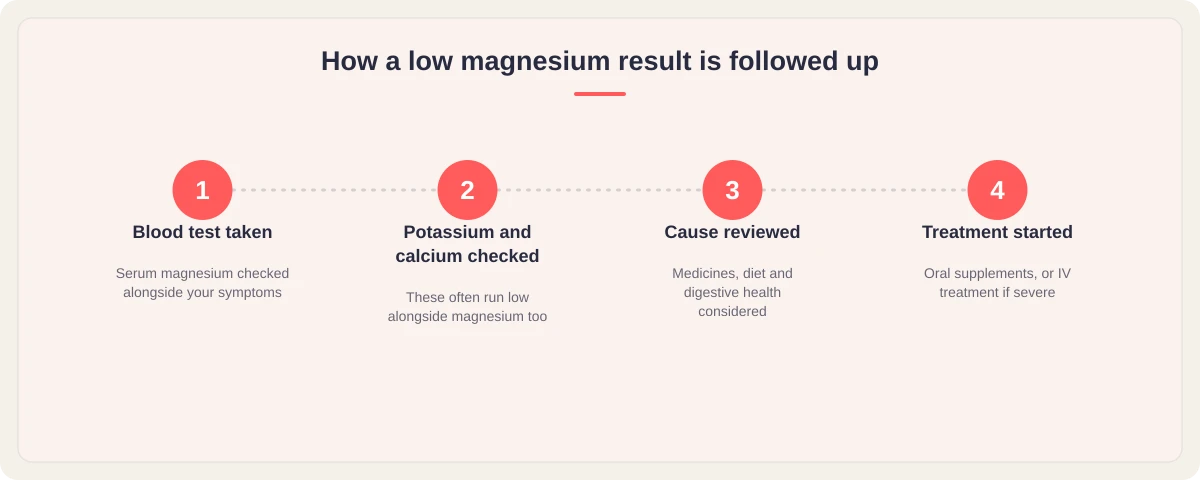
Once a low result is confirmed, the focus shifts to working out why, since treating the underlying cause, alongside correcting the magnesium level itself, gives the best chance of the problem not recurring.
How is magnesium deficiency treated?
Treatment depends on how low the level is and how it is affecting you. Mild to moderate deficiency is usually managed with oral magnesium supplements, such as magnesium aspartate, alongside advice on including more magnesium-rich foods, including nuts, seeds, wholegrains, leafy green vegetables and legumes, in your diet. Oral supplements can sometimes cause loose stools or stomach upset, particularly at higher doses, so a pharmacist can advise on a sensible starting dose and how to build up gradually if needed.
Severe deficiency, particularly where there are related changes to heart rhythm or very low blood levels, is usually treated with magnesium given intravenously in hospital rather than by tablets alone. This also tends to apply when the digestive system cannot absorb oral supplements reliably, for example during a flare of inflammatory bowel disease.
Addressing the underlying cause matters too: this might mean reviewing a medicine that could be contributing, managing diarrhoea or a digestive condition, or improving blood sugar control. Low potassium or calcium, where present, is usually corrected alongside the magnesium, since these minerals often need to be brought back into range together rather than one at a time.
It is worth being cautious about starting high-dose magnesium supplements on your own without medical advice, particularly if you have kidney problems or are older, since the kidneys are responsible for clearing excess magnesium and too much can cause its own symptoms, including low blood pressure, a slowed heart rate and drowsiness.
When to speak to a pharmacist or GP
It is worth arranging a blood test if you have ongoing tiredness, muscle cramps or twitches, or numbness and tingling that has appeared without an obvious cause, particularly if you also have one of the risk factors above, such as long-term use of a proton pump inhibitor or diuretic, a digestive condition, or heavy alcohol intake.
Do not start a high-dose magnesium supplement on your own if you have kidney problems, without checking with a pharmacist or GP first. Our pharmacy team can arrange private blood testing, including magnesium alongside other relevant markers, with results reviewed by a clinician who can explain what they mean and discuss suitable next steps, subject to suitability. Going through your GP works just as well, so use whichever route is easiest for you.
Frequently asked questions
What are the first signs of magnesium deficiency?
Early signs are often subtle and non-specific, such as tiredness, loss of appetite and mild nausea. As it progresses, muscle cramps, twitching or tingling tend to become more noticeable.
Can you have low magnesium without any symptoms?
Yes. Many people with mildly low magnesium have no symptoms at all, and it is often picked up incidentally on a blood test done for another reason.
Why does my GP check potassium and calcium at the same time as magnesium?
Low magnesium often occurs alongside low potassium and calcium, so a clinician will usually check all three together and may need to correct more than one at once.
Can I just take a magnesium supplement without a blood test?
It is best to get a blood test and clinician review first, especially if you have kidney problems or take other medicines, since supplementing without knowing the cause can mask what is driving the issue, and taking too much magnesium carries its own risks.
How is severe magnesium deficiency treated?
Severe cases are usually treated with magnesium given intravenously in hospital, particularly where there are related changes to heart rhythm or very low blood levels.
Which medicines can cause magnesium deficiency?
Long-term use of proton pump inhibitors (acid-reducing medicines), some diuretics, certain antibiotics and some cancer treatments have all been linked to lower magnesium levels.