
Folate deficiency: symptoms, testing and treatment explained
Quick answer
Folate deficiency can cause tiredness, mouth ulcers, a sore tongue and pins and needles, and in pregnancy it raises the risk of neural tube problems in the baby. It is confirmed with a blood test, usually alongside a vitamin B12 check, and treated with folic acid tablets and dietary advice.
What is folate and why does the body need it?
Folate, also known as vitamin B9, is needed to make new red blood cells, to support normal DNA production, and to help the nervous system work properly. It works closely alongside vitamin B12 in the same pathway, which is why the two are often tested and discussed together.
Unlike vitamin B12, the body only stores a few months' worth of folate at a time, mainly in the liver. This means levels can drop relatively quickly if intake falls or the body's needs increase, such as during pregnancy, compared with a nutrient the body can bank for years.
Folate is found naturally in leafy green vegetables, pulses and some fruit, and the synthetic form, folic acid, is added to some fortified foods and used in supplements. Because it is not stored in large amounts, a steady intake over time matters more than it does for some other vitamins.
What causes folate deficiency?
The most common cause is simply not getting enough folate from food over a sustained period, particularly a diet low in vegetables, pulses and fortified foods. Cooking can also destroy a large proportion of the folate in vegetables, so how food is prepared plays a part too.
Regularly drinking more alcohol than recommended can reduce how well the body absorbs and uses folate, and heavy, long-term alcohol use is one of the more common causes seen in the UK. Conditions that affect the gut, such as coeliac disease or Crohn's disease, can also reduce absorption even when someone eats a reasonably balanced diet.
Certain long-term medicines are linked to lower folate levels, including methotrexate, some anti-epileptic medicines such as phenytoin, and sulfasalazine, which is used for inflammatory bowel disease and rheumatoid arthritis. Pregnancy and conditions that increase red blood cell turnover, such as some chronic blood disorders, raise the body's folate requirement and can lead to deficiency if intake does not keep up.

Common symptoms to look out for
Symptoms often build up gradually and can be easy to put down to a busy lifestyle or getting older. The most frequently reported signs include ongoing tiredness and low energy, breathlessness on exertion, and a sore, red tongue or mouth ulcers that will not settle.
Some people notice pins and needles or numbness in the hands and feet, irritability or low mood, and a reduced sense of taste. Pale skin and a fast heartbeat can also occur, particularly once the deficiency has progressed to affecting red blood cell production.
Because folate and vitamin B12 work in the same pathway, the symptoms of a deficiency in either can look very similar, and it is not possible to tell them apart from symptoms alone. This is one of the main reasons both are usually checked together rather than assuming which one is responsible.
Who is more likely to be affected?
Pregnant women have a higher folate requirement and are a key group to consider, both because of the general risk of deficiency and because of the specific role folate plays in early fetal development. People who regularly drink more alcohol than the recommended limits, and anyone with a persistently poor or limited diet, are also more likely to become deficient.
Anyone with a digestive condition that affects absorption, such as coeliac disease or Crohn's disease, is at increased risk, as is anyone taking methotrexate, certain anti-epileptic medicines or sulfasalazine on a long-term basis. Older adults with a reduced appetite or a limited diet can also be affected.
People with a condition that increases red blood cell turnover, such as some inherited blood disorders, tend to need more folate than usual and are more likely to become deficient if their diet or supplementation does not keep pace with that demand.
How is it diagnosed?
A blood test is the only reliable way to confirm folate deficiency, since the symptoms overlap with several other conditions. Serum folate is the test most commonly used, though it mainly reflects recent intake, so a result can occasionally look normal even when body stores are low.
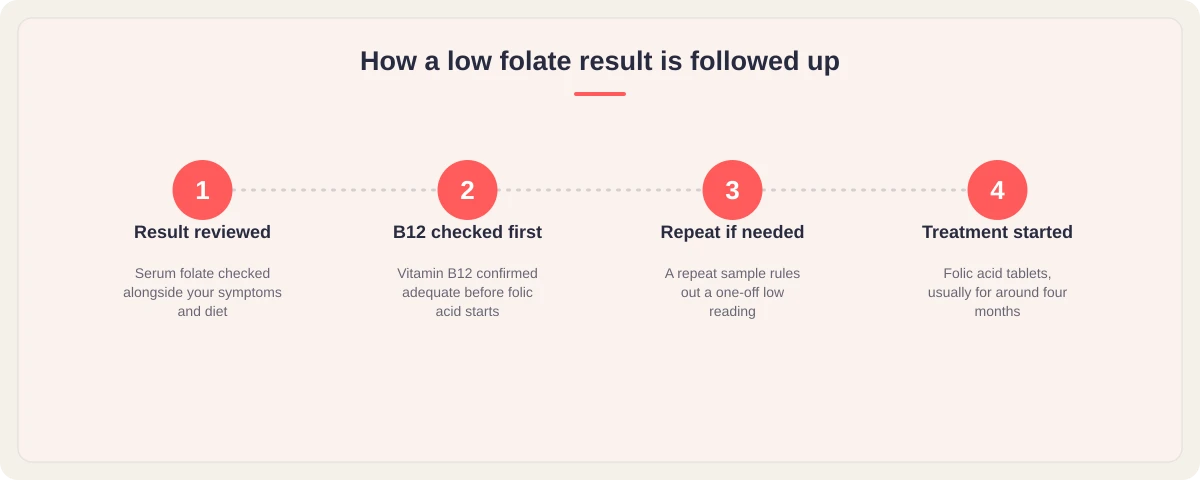
A full blood count is usually done alongside it, since folate deficiency, like vitamin B12 deficiency, can cause red blood cells to become larger than normal, a pattern known as macrocytic anaemia. Vitamin B12 is almost always checked at the same time, because starting folic acid without knowing your B12 level can occasionally mask an underlying B12 deficiency and allow it to progress unnoticed.
A clinician reviewing your results will usually weigh them up alongside your symptoms, diet, alcohol intake and any relevant medicines, rather than looking at a single number in isolation, since the right next step depends on what is likely to be driving the low result.
How is folate deficiency treated?
Treatment is usually a course of daily folic acid tablets, typically continued for around four months, alongside advice on including more folate-rich foods in your diet. Most people notice tiredness and other general symptoms starting to ease within a few weeks of beginning treatment.
As with vitamin B12 deficiency, your B12 level is normally checked and confirmed as adequate before folic acid treatment starts, or the two are treated together if both are low. This sequence matters because correcting folate first, without addressing a co-existing B12 deficiency, can occasionally improve symptoms enough to hide the B12 problem while nerve-related damage continues in the background.
Once a course of folic acid treatment finishes, most people do not need to continue supplements if their diet supports adequate ongoing intake. If an underlying cause, such as a medicine you are taking or a digestive condition, is contributing to the deficiency, that will usually be reviewed too, so the reason behind the low level is addressed rather than just the blood result.
Diet, food sources and folic acid in pregnancy
Good dietary sources of folate include broccoli, spinach and other leafy greens, Brussels sprouts, peas, chickpeas and other pulses, and oranges. In the UK, some breakfast cereals and other foods are also fortified with folic acid, which can help top up overall intake.
Folate has a particularly important role in early pregnancy, when it supports the healthy development of the baby's neural tube, which goes on to form the brain and spinal cord. NHS guidance recommends taking a 400 microgram folic acid supplement daily from before conception, where planned, and throughout the first 12 weeks of pregnancy. Some women are advised a higher dose, such as 5 milligrams, if they have a higher individual risk, and this should be discussed with a GP or midwife rather than decided alone.
Anyone planning a pregnancy, or who could become pregnant, is generally encouraged to start folic acid supplementation as early as possible, since the neural tube forms in the first few weeks, often before a pregnancy is confirmed.
When to speak to a pharmacist or GP
It is worth arranging a blood test if you have ongoing tiredness that does not improve with rest, mouth ulcers or a sore tongue that will not settle, or pins and needles that has appeared without an obvious cause. This is particularly relevant if you drink more alcohol than the recommended limits, have a digestive condition, or take methotrexate, an anti-epileptic medicine or sulfasalazine long term.
If you are pregnant or planning a pregnancy, speak to a pharmacist, GP or midwife promptly about folic acid supplementation, rather than waiting for a routine appointment, since timing matters most in the earliest weeks.
Our pharmacy team can arrange private blood testing, including a full blood count and folate and B12 levels, with results reviewed by a clinician who can explain what they mean and discuss suitable next steps, subject to suitability. If you would rather go through your GP, that route works just as well; either way, it is best to get a proper blood test before starting folic acid supplements on your own for anything beyond routine pregnancy advice.
Frequently asked questions
What are the first signs of folate deficiency?
Early signs are often subtle: persistent tiredness, low energy and mild breathlessness on exertion. As it progresses, mouth ulcers, a sore tongue and pins and needles tend to become more noticeable.
Can you have folate deficiency without anaemia?
Yes. Folate levels can fall before red blood cells are affected, which is why a serum folate level is checked directly rather than relying on a full blood count alone.
Why does my GP check vitamin B12 before starting folic acid?
Folate and vitamin B12 work in the same pathway and can cause similar symptoms. Correcting a folate deficiency without checking B12 can sometimes improve symptoms enough to mask an underlying B12 deficiency, allowing nerve-related damage to continue unnoticed.
How much folic acid should I take in pregnancy?
NHS guidance recommends 400 micrograms daily from before conception, where planned, through the first 12 weeks of pregnancy. Some women are advised a higher dose based on individual risk factors, which should be discussed with a GP or midwife.
How long does folic acid treatment take to work?
Many people notice tiredness and general symptoms improving within a few weeks of starting treatment. A full course is typically continued for around four months to properly restore folate levels.
Can you get enough folate from diet alone?
Many people can, with regular leafy greens, pulses and fortified foods, but those with a limited diet, a digestive condition, higher alcohol intake or increased needs such as pregnancy may need a supplement to maintain adequate levels.