
Hives treatment: how to calm an itchy rash and when to seek help
 Reviewed by the My London Pharmacy clinical team · Clinically checked by Zeenah Araim, GPhC 2077620
·27 October 2026
·8 min read
·Reviews on Trustpilot
Quick answer
Hives are itchy, raised skin wheals that come and go, often within 24 hours each, usually triggered by an infection, food, medicine, heat or stress. Most settle with a non-drowsy antihistamine and simple home care. Seek urgent help if your lips, tongue or throat swell, or you feel faint or breathless.
What are hives (urticaria)?
Hives, also called urticaria, are itchy, raised patches or welts (wheals) that appear on the skin, often with a pale centre and a red or pink edge. They can appear anywhere on the body, including the face, trunk and limbs, and vary in size from a few millimetres to several centimetres. Individual wheals often merge into larger, irregular patches as a flare develops.
A key feature of ordinary hives is that individual wheals are usually short-lived: most fade within 24 hours, even without treatment, though new ones can appear elsewhere as the older ones clear. This pattern, of wheals coming and going across different areas rather than one patch sitting fixed in the same place for days, is typical of urticaria and helps tell it apart from other itchy skin conditions such as eczema or a drug rash, which tend to be more fixed in location.
Hives can affect people of any age, including young children, and a first episode can feel alarming simply because of how quickly it appears and how itchy it can be. In most cases, however, hives on their own, without any swelling of the face or breathing symptoms, are uncomfortable rather than a sign of anything serious.
What causes hives?
Hives happen when a trigger causes skin cells called mast cells to release histamine and other chemicals into the surrounding tissue. This makes small blood vessels leak fluid into the skin, which produces the characteristic swelling, redness and itching. In many cases, no single trigger is ever identified for a particular flare: this is sometimes called idiopathic urticaria, and it is a common and recognised pattern rather than a sign that something has been missed.
Common triggers include:
- Infections, particularly common colds and other viral illnesses, are one of the most frequent causes in both children and adults, and hives can appear during or shortly after an infection as the immune system responds.
- Medicines, including some antibiotics, aspirin and other anti-inflammatory painkillers, which can trigger hives directly or make an existing tendency to flare worse.
- Foods, such as shellfish, nuts, eggs or strawberries, especially if hives appear quickly, typically within minutes to around an hour, after eating.
- Insect bites or stings, which can cause a local reaction or, less often, a more widespread one.
- Physical triggers, including heat, cold, sweating, tight clothing, pressure on the skin from straps or waistbands, or sunlight; these are grouped together as physical urticarias.
- Stress, which does not cause hives on its own but can make an existing tendency to flare worse, and is a commonly reported factor by people who already get hives for other reasons.
Hives are not always allergic. An allergic reaction is only one possible cause, and most people who develop hives do not have an underlying food or drug allergy that needs long-term avoidance. This is one reason why extensive allergy testing is not usually the first step for a straightforward flare of hives.
How to calm a hives flare-up at home
Most episodes of hives can be managed at home with simple self-care alongside a suitable antihistamine (see below). The aim of home care is to reduce anything that makes the itching and swelling worse while the flare settles on its own.
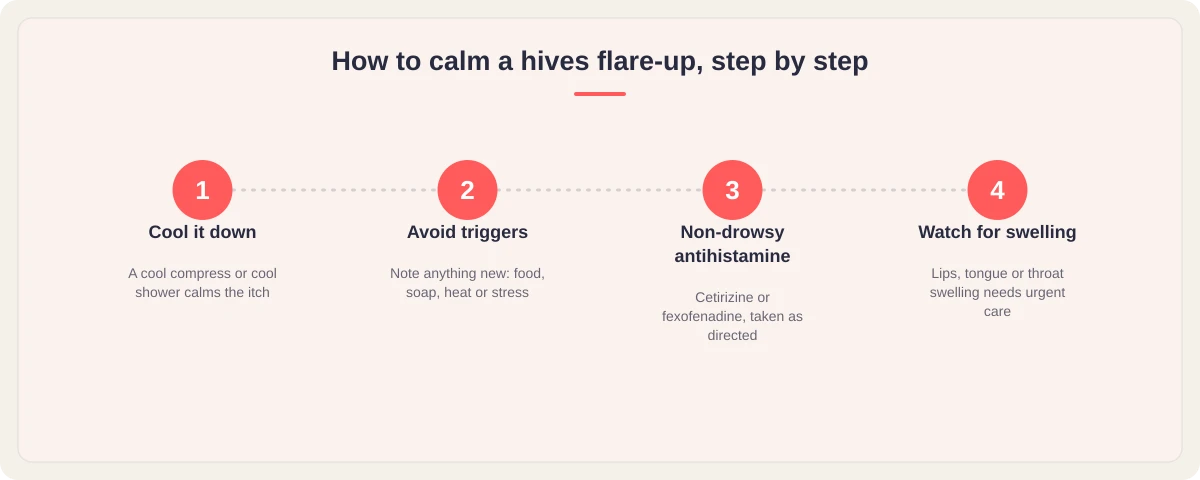
A few simple habits make a real difference while a flare settles:
- Apply a cool compress or take a cool shower, since heat tends to make itching worse, while a hot bath or shower can intensify a flare within minutes.
- Wear loose, breathable clothing made from natural fibres where possible, and avoid anything tight, scratchy or elasticated against affected skin.
- Try to identify and avoid any new trigger, such as a recently started medicine, a new food, a change of laundry detergent, or a new skincare product.
- Avoid scratching where possible, as it can break the skin, increase irritation, and occasionally lead to a secondary skin infection.
- Keep a note of when flare-ups happen and what you were doing, eating or taking beforehand; this can help a pharmacist or GP spot a pattern if hives keep returning.
- Keep your bedroom cool overnight if flares tend to be worse in bed, since warmth under bedding is a common reason hives feel more intense at night.
Most straightforward flares settle within a few days of consistent self-care and an antihistamine, though it is normal for a few new wheals to keep appearing for a while even as earlier ones fade.
Antihistamines for hives: what to know
Non-drowsy (second-generation) antihistamines, such as cetirizine or fexofenadine, are the usual first choice for hives and are available from a pharmacy without needing a prescription for most adults. They work by blocking the histamine that causes the itching and swelling, are generally well tolerated, and are taken once a day rather than several times, which makes them easier to use consistently during a flare.
If standard pharmacy doses are not controlling symptoms after several days, some people are advised by a pharmacist or doctor to take a higher-than-standard dose for a period. This should only be done on professional advice rather than self-directed, since it needs to be weighed against individual health factors. An older, sedating antihistamine, such as chlorphenamine, is occasionally used short-term at night if itching is disrupting sleep, but it can cause drowsiness the next day and is not usually suited to daytime use, particularly before driving or using machinery.
Antihistamines control the symptoms of hives rather than treating an underlying cause, so hives can return once a dose wears off until the trigger has resolved or been avoided. For this reason, people with ongoing or recurrent hives are often advised to keep taking a regular antihistamine for a set period, rather than only when a flare is visible, since this can reduce how noticeable the ups and downs feel.
How long do hives usually last?
An individual wheal typically fades within 24 hours, often sooner, but a flare-up as a whole, with new wheals appearing as old ones clear, can continue for longer than any single mark would suggest. Hives lasting under six weeks in total are classed as acute urticaria and are by far the most common pattern, often linked to a recent infection, a short course of medicine, or a one-off trigger that has since passed.
Hives that continue, or keep returning, for six weeks or more are classed as chronic urticaria, sometimes called chronic spontaneous urticaria when no clear trigger is found. This pattern is less commonly linked to a single obvious cause and is more likely to need review by a GP or dermatologist, who may consider a supervised trial of a higher antihistamine dose or, in persistent cases that do not respond, other specialist treatment options. Chronic urticaria is not usually dangerous, but it can be disruptive to sleep, work and confidence, which is a reasonable reason on its own to seek a proper review rather than managing it indefinitely with over-the-counter antihistamines alone.
When hives need urgent medical help
Most hives are uncomfortable rather than dangerous, but a small number of flare-ups are part of a more serious allergic reaction and need urgent attention rather than home care.
Call 999 or go to A&E immediately if, alongside hives, you or someone else has:
- Swelling of the lips, tongue, throat or around the eyes (angioedema)
- Difficulty breathing, swallowing, or a tight feeling in the throat or chest
- Dizziness, fainting, or a fast or irregular heartbeat
- Signs of a wider allergic reaction (anaphylaxis) appearing shortly after a new food, medicine or an insect sting
See a GP or contact a pharmacist promptly, rather than waiting it out, if:
- Hives cover a large area of the body, or come with a fever or feeling generally unwell
- Symptoms do not improve after a few days of a standard-dose, non-drowsy antihistamine
- Hives keep coming back over several weeks, suggesting a chronic rather than one-off pattern
- A young child develops widespread hives, especially alongside other symptoms such as vomiting or lethargy
If you have ever needed emergency treatment for a severe allergic reaction, carrying any prescribed emergency medicine with you and knowing how and when to use it matters more than remembering the details above, since symptoms in a genuine emergency can progress quickly.
Frequently asked questions
Can stress cause hives?
Stress does not cause hives on its own, but it can make hives worse or trigger a flare in someone who is already prone to them. Managing stress alongside other triggers can help reduce how often flares happen.
What is the difference between acute and chronic urticaria?
Acute urticaria lasts under six weeks and is often linked to an infection or a one-off trigger. Chronic urticaria continues, or keeps returning, for six weeks or more and is more likely to need review by a GP or dermatologist.
Can hives be a sign of a food allergy?
Hives can be a sign of a food allergy, especially if they appear quickly after eating and come with other symptoms such as swelling or breathing difficulty. However, most cases of hives are not caused by a food allergy.
Is it safe to exercise or shower during a hives flare?
A cool shower can help ease itching, but hot water, saunas and intense exercise tend to make hives worse because heat and sweating are common triggers. A lukewarm or cool shower and gentler activity are usually better during a flare.
Can you prevent hives from coming back?
If a clear trigger has been identified, such as a particular medicine or food, avoiding it going forward is the most effective way to prevent further flares. When no trigger is found, keeping a symptom diary and discussing persistent or recurring hives with a pharmacist or GP can help guide next steps.